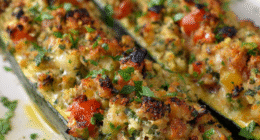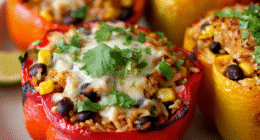
Ever find yourself staring at a fridge full of roasted peppers, wondering what to do? I’ve been there, especially after a big roast that left me with a half-dozen peppers. Instead of just reheating, I decided to stuff them with a vibrant, protein-packed mixture that makes the most of those sweet, smoky peppers.
This recipe is about turning leftovers into something exciting, without much fuss. It’s a humble dish, but one that’s surprisingly satisfying—bright, filling, and a bit messy in the best way. Plus, it’s a gentle reminder that good food doesn’t need to be complicated, especially when you’re working with what you already have.
Cooking with leftovers: transforming yesterday’s roasted peppers into a hearty, fresh vegan meal.
Why This Dish Matters to Me
- I love how adaptable this dish is—whatever leftovers I have, they find a home here.
- It’s a mess in the oven but so worth it when I get that first bite.
- There’s a quiet pride in turning scraps into something hearty and tasty.
A Little Kitchen Magic
- This recipe started as a way to use up leftover roasted peppers after a big family dinner.
- I wanted something warm and satisfying but still light enough for a quick lunch.
- It’s become a go-to when I need to clear the fridge and still eat well.
The Curious History of Stuffed Peppers
- Inspired by the need to reinvent leftovers into a wholesome meal.
- Bell peppers have been cultivated for thousands of years, originating in Central and South America.
- Stuffed peppers have roots in Mediterranean and Middle Eastern cuisines, with variations across cultures.
Ingredient Insights
- Leftover roasted peppers: Sweet, smoky, with a slightly caramelized flavor that deepens during baking. Ideal for stuffing.
- Cooked grains: Quinoa or rice add texture and bulk. Use whatever you have, but cook the grains a bit firmer for better hold.
- Herbs and lemon: Brighten the dish with fresh herbs and a squeeze of lemon. Adjust based on what’s fresh in your fridge.
- Olive oil: Adds richness and helps with browning. Use a good quality oil for best flavor.
- Seasonings: Salt, pepper, and optional spices—keep the seasoning simple to let the peppers shine.
Key Ingredients Spotlight
Bell Peppers:
- Their natural sweetness caramelizes slightly as they bake, adding depth.
- Roasted peppers: Imparts a smoky aroma and softens into a tender, flavorful base.
Fresh Herbs:
- Lemon: Brightens the whole dish with a zing that cuts through richness.
- Herbs: Fresh parsley or cilantro add a fragrant, herbal lift.
Ingredient Substitutions
- Dairy-Free: Use coconut yogurt or tahini to add creaminess—rich but with a nutty, bright flavor.
- Gluten-Free: Ensure grains are gluten-free, like quinoa, or skip grains altogether.
- Soy-Free: Use sunflower or pumpkin seeds for added crunch.
- Extra Protein: Add chopped nuts or lentils to the filling for more substance.
- Spicy Kick: Mix in a dash of cayenne or hot sauce for heat—just a little for balance.
Equipment & Tools
- Baking dish: Hold the stuffed peppers during baking.
- Sharp knife: Cut and core the peppers.
- Mixing bowl: Combine the filling ingredients.
- Spoon or spatula: Stuff the peppers.
How to Make Vegan Stuffed Peppers from Leftovers
- Preheat oven to 190°C (375°F).
- Cut the tops off the peppers and remove seeds, keeping the peppers whole.
- In a bowl, mix leftover roasted peppers, cooked grains (like quinoa or rice), chopped herbs, and a squeeze of lemon.
- Stuff the peppers with the mixture, pressing down gently.
- Place stuffed peppers in a baking dish. Drizzle with olive oil.
- Bake for 25-30 minutes, until peppers are tender and filling is bubbling.
- Check the peppers: they should be soft and slightly charred around the edges.
- Remove from oven and let rest for 5 minutes before serving.
Let the peppers sit for 5 minutes to settle before serving, allowing flavors to meld.
How to Know It’s Done
- Peppers are soft and slightly charred.
- Filling is hot and bubbling.
- Peppers smell smoky and sweet, with herbs bright and fresh.
Vegan Stuffed Roasted Pepper Boats
Ingredients
Equipment
Method
- Preheat your oven to 190°C (375°F) and set a baking dish aside.
- Use a sharp knife to carefully cut off the tops of each bell pepper and remove the seeds and membranes, keeping the peppers whole.
- In a mixing bowl, combine the cooked grains with chopped herbs, a squeeze of lemon juice, and a splash of olive oil. Mix well until everything is evenly coated and the flavors meld.
- Taste the mixture and season with salt, pepper, and additional lemon juice if desired, adjusting to your flavor preference.
- Gently stuff each pepper with the prepared grain mixture, pressing down lightly to ensure they are filled well without overflowing.
- Arrange the stuffed peppers upright in the baking dish, drizzle them lightly with olive oil, and cover the dish with foil.
- Bake in the preheated oven for 25-30 minutes, until the peppers are tender and slightly caramelized around the edges, and the filling is bubbling.
- Remove the dish from the oven and let the peppers rest for 5 minutes, allowing the flavors to settle and the filling to firm up slightly.
- Drizzle with a little extra olive oil or a squeeze of lemon for added brightness before serving.
- Use a sharp knife to cut into the peppers and serve hot, enjoying the smoky, flavorful filling with the tender roasted peppers.
Tips & Tricks for Perfect Stuffed Peppers
- Use a sharp knife for clean cuts on the peppers.
- Press the filling down gently so it stays in place during baking.
- Add a splash of water or broth in the baking dish to keep peppers moist.
- Use high-quality olive oil for drizzling—flavor makes a difference.
- Taste the filling before stuffing; adjust seasoning as needed.
Common Mistakes and How to Fix Them
- FORGOT to preheat? Turn on oven early—peppers will start baking sooner.
- DUMPED too much filling? Use a spoon to remove excess and save for another meal.
- OVER-TORCHED peppers? Cover with foil and lower oven temp for a few minutes.
- Filling is dry? Mix in a splash of olive oil or lemon juice before stuffing.
Quick Fixes for Common Issues
- When peppers are too firm, bake for an extra 10 minutes.
- Splash a little vinegar or lemon juice to brighten dull flavors.
- Patch over soggy peppers with a quick breadcrumb topping.
- Shield peppers from over-browning with foil if they turn too dark.
- Reheat leftovers covered to keep moisture in.
Make-Ahead and Storage Tips
- Prepare the filling a day ahead, keep refrigerated for up to 24 hours.
- Stuff the peppers just before baking to prevent sogginess.
- Leftovers keep well for 3 days in an airtight container in the fridge.
- Reheat in the oven at 180°C (350°F) for 10 minutes until hot and fragrant.
10 Practical Q&As about Vegan Stuffed Peppers
1. How do I choose the best peppers?
Use bell peppers that are firm and bright; avoid soft or wrinkled ones.
2. Should I pre-cook the filling?
Pre-cook the filling slightly to meld flavors better and ensure even cooking.
3. What’s the ideal baking time and temperature?
Bake at 190°C (375°F) for about 25-30 minutes until peppers are tender and filling is bubbling.
4. Why rest the stuffed peppers before serving?
Let the peppers rest for 5 minutes after baking to allow flavors to settle.
5. How do I serve the stuffed peppers?
Use a sharp knife to cut, and a spatula to serve, for clean slices.
6. Can I add toppings or sauces?
Add a squeeze of lemon or a drizzle of tahini for brightness.
7. How long do leftovers keep?
Store leftovers in an airtight container for up to 3 days in the fridge.
8. How do I reheat without drying out?
Reheat in the oven at 180°C (350°F) for about 10 minutes until hot.
9. What if peppers aren’t soft enough?
If peppers are still too firm, cover with foil and bake a few extra minutes.
10. Any tips for mixing the filling?
Stir the filling well before stuffing to ensure even seasoning and texture.
There’s something about the simplicity of stuffed peppers that keeps drawing me back. Maybe it’s the way the filling oozes out when you bite in, or how the smoky sweetness of the peppers melds with the savory stuffing. It’s a little meal that feels like a small triumph, especially when you’re tight on time or ingredients.
In the end, it’s all about making something that feels personal—kind of like a little kitchen victory. No matter how many times I make this, it always feels like an act of creative recycling, turning what I have into something comforting and real.