Baking falafel might sound like heresy to some, but I’ve found it’s a quiet little game changer. It’s all about that gentle roast, which develops a smoky depth without the splatter or the guilt of frying in hot oil. Plus, the aroma that drifts through the kitchen—nutty, toasted, a hint of garlic—feels like a small celebration every time.
What I love most is how forgiving this method is. No frantic flipping, no oil splatters, just a steady oven heat coaxing tender insides and a crisp exterior. It’s the kind of recipe that feels like a warm secret you can share with anyone, even if they’re skeptical about baked falafel. Honestly, it’s become my go-to when I want something hearty but fuss-free.
Focusing on the overlooked art of baking falafel instead of frying, highlighting how this method preserves the tender interior while developing a subtle, roasted flavor that’s easier on the kitchen and less greasy.
Story behind this recipe
- I first stumbled upon baked falafel when I was trying to find a less greasy way to enjoy my favorite street food. It was late, I was tired, and the oven seemed like a lazy hero. The smell of cumin, garlic, and toasted chickpeas filled my tiny kitchen, making me feel like I’d discovered something secret.
- Over time, I realized baking gave the falafel a tender bite with a gentle crust—less harsh than frying but just as satisfying. It’s a recipe born out of necessity and curiosity, a way to keep that crispy, herbaceous magic without the mess. Now, it’s become a staple when I want comfort that’s easy on the hands and on my conscience.
- heading
- Story behind this recipe
Key ingredients and tips
- Canned chickpeas: I prefer these for convenience, but make sure they’re well-drained and rinsed to avoid a mushy texture. The faintly nutty aroma when they’re blended is a good sign.
- Fresh parsley and cilantro: Brighten up the falafel with these herbs. Use a generous handful each; the vibrant green color and fresh scent really lift the flavor.
- Garlic: I love a hefty clove, which adds a pungent, spicy kick. Roast or sauté it first if you want a mellower, caramelized sweetness that’s less sharp.
- Sesame seeds: Toasted lightly, they add a nutty aroma and a subtle crunch. Feel free to skip if you’re allergic, but they do bring a toasted richness.
- Cumin and coriander: These spices give the falafel that warm, earthy undertone. Toast them briefly in a dry pan first for a more intense, smoky flavor.
- Baking powder: A small pinch helps the falafel puff up slightly. Don’t overdo it or they’ll become too airy and fragile to handle.
- Olive oil: Just a drizzle in the mixture keeps it moist and helps with binding. Use good-quality, fruity oil for a subtle, fragrant richness.
Spotlight on key ingredients
Chickpeas and herbs:
- Canned chickpeas: I prefer these for convenience, but make sure they’re well-drained and rinsed to avoid a mushy texture. The faintly nutty aroma when they’re blended is a good sign.
- Fresh parsley and cilantro: Brighten up the falafel with these herbs. Use a generous handful each; the vibrant green color and fresh scent really lift the flavor.
- Garlic: I love a hefty clove, which adds a pungent, spicy kick. Roast or sauté it first if you want a mellower, caramelized sweetness that’s less sharp.
Spices and leavening:
- Sesame seeds: Toasted lightly, they add a nutty aroma and a subtle crunch. Feel free to skip if you’re allergic, but they do bring a toasted richness.
- Cumin and coriander: These spices give the falafel that warm, earthy undertone. Toast them briefly in a dry pan first for a more intense, smoky flavor.
- Baking powder: A small pinch helps the falafel puff up slightly. Don’t overdo it or they’ll become too airy and fragile to handle.
Notes for ingredient swaps
- Gluten-Free: Use chickpea flour instead of canned chickpeas for a nutty flavor and a smoother texture, but expect a slightly denser falafel.
- Vegan: Skip the eggs if used as a binder; add a tablespoon of ground flaxseed mixed with water for moisture and binding.
- Low-Sodium: Opt for unsalted chickpeas and reduce added salt; enhance flavor with extra herbs and spices to compensate.
- Extra Garlic: Increase to 3 cloves for a more pungent, aromatic falafel that packs a punch with each bite.
- Herb Variations: Swap parsley and cilantro for fresh mint or basil to shift the flavor profile and add a different herbal brightness.
- Spice Level: Add a pinch of cayenne or smoked paprika for a smoky, spicy kick that elevates the savory notes.
- Oil-Free: Instead of olive oil, incorporate a spoonful of tahini or water to keep the mixture moist, but expect a slightly different texture.
Equipment & Tools
- Oven: To bake the falafel evenly
- Baking sheet: To hold the falafel during baking
- Parchment paper: Prevent sticking and make cleanup easier
- Food processor: To blend ingredients into a coarse mixture
- Spatula: To flip and handle the falafel gently
Baked Falafel Step-by-Step
- Preheat your oven to 200°C (390°F). Gather a baking sheet lined with parchment paper, a food processor, a small bowl for mixing, and a spatula.
- Drain and rinse 1 can of chickpeas. Pat them dry with a towel to remove excess moisture.
- In the food processor, combine chickpeas, 2 cloves garlic, a handful of chopped parsley and cilantro, 1 teaspoon cumin, 1/2 teaspoon coriander, and a pinch of salt. Pulse until the mixture is coarse but holds together when pressed.
- Add 1/2 teaspoon baking powder and 1 tablespoon olive oil. Pulse again until evenly mixed. If the mixture feels too dry, add a teaspoon of water.
- Form the mixture into small, slightly flattened balls or patties, about the size of a golf ball, and place on the prepared baking sheet. Space them evenly.
- Bake in the preheated oven for 20-25 minutes. After 10 minutes, flip them gently using a spatula for even browning. The falafel should turn golden and smell nutty and fragrant.
- Once baked, remove from oven and let rest for 5 minutes. They will firm up slightly as they cool. Serve warm or at room temperature.
Let the baked falafel rest for 5 minutes on the baking sheet. Serve warm with a side of tahini sauce, fresh salad, or pita. They can also be cooled completely and stored for later use.
How to Know It’s Done
- Falafel is golden brown and slightly crisp on the outside.
- The mixture holds together firmly when shaped, not crumbly.
- The internal texture is tender but not mushy, with a fragrant aroma.
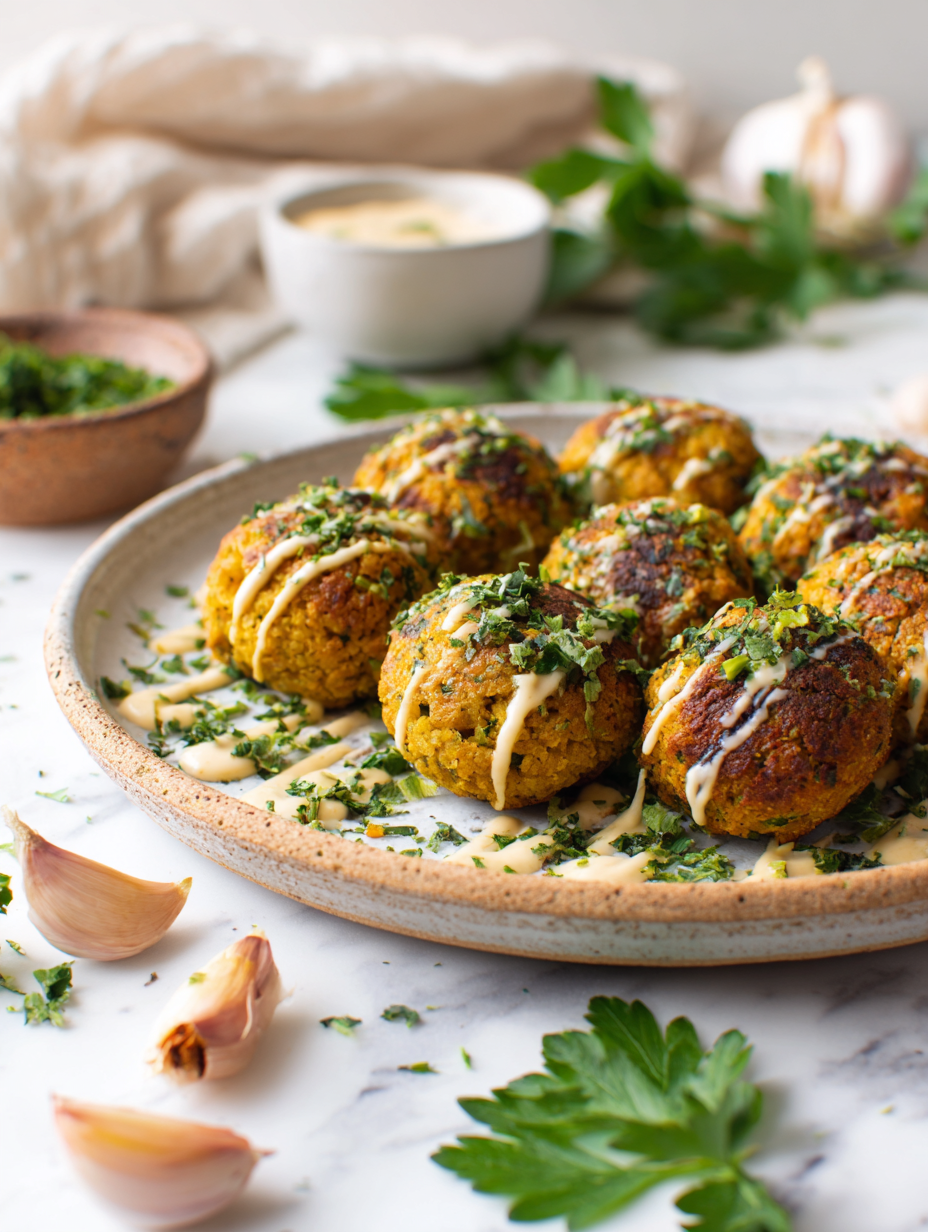
Baked Falafel
Ingredients
Equipment
Method
- Preheat your oven to 200°C (390°F) and line a baking sheet with parchment paper. Drain and rinse the chickpeas thoroughly, then pat dry with a towel to remove excess moisture.
- In a skillet, toast the cumin and coriander briefly over medium heat until fragrant, about 30 seconds, then let them cool slightly.
- Combine the chickpeas, roasted garlic, chopped parsley, cilantro, toasted cumin, coriander, baking powder, olive oil, and salt in a food processor. Pulse until the mixture is coarse but holds together when pressed—don’t over-process, to keep some texture.
- Check the mixture; if it feels too dry, add a teaspoon of water and pulse again until it binds nicely. The mixture should be moist but firm enough to shape.
- Using damp hands, form the mixture into small balls or flattened patties, about the size of a golf ball, and place them evenly on the prepared baking sheet.
- Bake in the preheated oven for 20-25 minutes, flipping them halfway through with a spatula to ensure even browning. They should turn golden and release a nutty aroma.
- Remove the falafel from the oven and let them rest for 5 minutes. This helps set their shape and enhances their crisp exterior.
- Serve the baked falafel warm, with your favorite accompaniments like tahini sauce, pita, or fresh salad. Enjoy their tender insides and crispy exterior in every bite!
Pro tips for perfect baked falafel
- Bolded mini-head: Use a food processor for a uniform, coarse blend that prevents over-mashing.
- Bolded mini-head: Chill your mixture for 15 minutes — it firms up for easier shaping and better texture.
- Bolded mini-head: When forming falafel, keep hands slightly damp to prevent sticking and ensure smooth edges.
- Bolded mini-head: Flip the falafel halfway through baking — this promotes even browning and a crisp exterior.
- Bolded mini-head: If falafel cracks or falls apart, add a teaspoon of water or more olive oil to the mixture.
- Bolded mini-head: For extra crispness, spray or brush falafel with a light drizzle of oil before baking.
- Bolded mini-head: Let baked falafel rest for 5 minutes after baking — it helps set the shape and enhances texture.
Common mistakes and how to fix them
- FORGOT to preheat the oven → Always preheat to ensure even baking.
- DUMPED in all ingredients at once → Add ingredients gradually for better texture control.
- OVER-TORCHED the falafel → Keep an eye on baking time; turn when golden.
- MISSED resting time → Rest for 5 minutes to firm up before serving.
Quick Fixes and Pantry Swaps
- If falafel cracks, add a teaspoon of water and gently re-shape.
- When mixture feels too dry, splash in a little more olive oil to bind better.
- DUMPED in all ingredients at once → Mix gradually for a consistent texture.
- Over-torched edges? Reduce oven temperature slightly and keep a closer eye.
- Splash a little lemon juice or water if falafel is too dense or crumbly.
Prep, store, and reheat tips
- Prepare the falafel mixture up to 24 hours in advance; keep it covered in the fridge to let flavors meld and develop. The aroma deepens overnight, making it even more fragrant when baked.
- Shape the falafel into balls or patties ahead of time, then refrigerate on a tray covered with plastic wrap. They can be stored for up to 2 days without losing their texture.
- Baked falafel keeps well in an airtight container in the fridge for 3-4 days. Reheat in a warm oven at 180°C (350°F) for 8-10 minutes until crispy and fragrant again, with a satisfying crackle.
- For longer storage, freeze baked falafel for up to 1 month. Reheat directly from frozen, adding a few extra minutes until the outside is crisp and the aroma is bright.
Top questions about baked falafel
1. Does baked falafel get crispy enough?
Yes, baking falafel creates a crisp exterior with a tender inside, similar to frying but less greasy and more even in texture.
2. Can I use dried chickpeas instead of canned?
Using canned chickpeas is best for ease, but if you prefer dried, soak and cook them thoroughly first.
3. Can I make this with dried chickpeas?
Absolutely. Just soak dried chickpeas overnight, then drain well before blending to avoid extra moisture.
4. How long can I store baked falafel?
Yes, you can freeze baked falafel for up to a month. Reheat in the oven until hot and crispy again.
5. How do I reheat baked falafel?
Reheat in a 180°C (350°F) oven for about 10 minutes until warm and crispy, avoiding the microwave to keep crunch.
6. Is baked falafel healthier than fried?
Yes, this method reduces oil and mess, making it a healthier choice without sacrificing flavor or texture.
7. Can I customize the herbs in the recipe?
Adding extra herbs like mint or basil can bring a fresh twist and enhance the flavor profile.
8. Can I adjust the spices or make it milder?
Yes, you can omit or reduce spices like cumin or coriander if you prefer a milder flavor or want to adjust heat.
9. Can I make this gluten-free?
Yes, using gluten-free flour or chickpea flour helps keep it gluten-free without compromising the texture.
10. Is this recipe vegan-friendly?
Yes, for a vegan version, skip eggs or binds and use flaxseed meal mixed with water as a binder.
Baked falafel feels like a quiet rebellion against greasy takeout, and honestly, I prefer it that way. The smell of toasted chickpeas and herbs filling the kitchen—there’s something about that aroma that makes you pause and breathe it all in.
It’s a simple, honest approach to a usually messy dish, and I’m often surprised how much flavor and crunch you can achieve without all the oil. Sometimes, less really is more, especially when it comes to good, home-cooked comfort food.