Baking chicken meatballs might sound straightforward, but for me, it’s become a kind of kitchen meditation. The process of shaping, placing, and waiting for those little balls to turn golden feels almost therapeutic—like a slow, mindful ritual that clears my head. It’s a quiet way to turn a simple dinner into a moment of calm amidst a busy day.
What I love most is how this method strips away the fuss of frying or simmering. The oven does the work, and I get to focus on the small details—like feeling the texture of the meat mixture or catching that first whiff of herbs warming up. It’s honest cooking, unpolished but reliable, and somehow that makes it all the more satisfying.
This recipe focuses on how baking chicken meatballs can be a stress-relieving, meditative process—turning a simple dinner into a mindful kitchen ritual that soothes the mind.
The story behind this recipe
- This recipe sprouted from a lazy Sunday afternoon, when I had a handful of chicken and a craving for something comforting but effortless. I remembered my mom’s simple meatball recipe, but wanted to try baking instead of frying—less mess, less fuss, and a better chance at even cooking.
- Baking these meatballs transformed my approach to weeknight dinners. I loved how the oven’s even heat kept them juicy inside with a lightly crispy exterior—no turning, no splatters. It’s become my go-to method when I want something honest and fuss-free, yet still satisfying enough to serve family or friends.
- heading: The comfort of simple bites
Key Ingredients and Tips
- Ground chicken: I prefer it fresh, it feels juicier and more tender—your choice of breast or thigh can change the flavor profile, so pick what suits your mood. The aroma of raw meat is faint but promising, like a whisper of what’s to come.
- Breadcrumbs: I use day-old bread blitzed into crumbs—adds a subtle crunch and keeps the meatballs moist. Swap for panko if you want a lighter texture, but skip the seasoned kind unless you want a flavor punch right from the start.
- Egg: It’s the glue that holds everything together, no escaping that. I usually use a large egg, but if you’re making smaller batches, a half might work. It’s the quiet hero that prevents the meatballs from disintegrating into a crumbling mess.
- Herbs & garlic: Fresh parsley and garlic give it vibrancy—smell that hit of earth and spice as you mix. Dried herbs can work in a pinch, but you’ll miss that lively, fresh aroma that makes each bite feel bright.
- Olive oil: I drizzle a little into the mixture for richness and to help the meatballs brown evenly. If you’re out, a neutral oil like canola does the job—just keep an eye on the color to avoid over-browning. The sizzle of the oil when shaping is a good sign you’re ready to bake.
- Salt & pepper: Season generously—these are the basics that bring everything together. I lean towards flaky sea salt for a burst of crunch and subtle saltiness that enhances the herbs and chicken’s natural flavor. Adjust to taste, but don’t hold back.
- Optional cheese: A sprinkle of grated Parmesan or Pecorino can add a salty, umami kick, especially if you’re serving these with pasta or a tomato sauce. It’s a small addition that makes a big difference—think of it as a final flourish.
Spotlight on key ingredients
Ground chicken:
- I prefer it fresh, it feels juicier and more tender—your choice of breast or thigh can change the flavor profile, so pick what suits your mood. The aroma of raw meat is faint but promising, like a whisper of what’s to come.
- Breadcrumbs: I use day-old bread blitzed into crumbs—adds a subtle crunch and keeps the meatballs moist. Swap for panko if you want a lighter texture, but skip the seasoned kind unless you want a flavor punch right from the start.
- Egg: It’s the glue that holds everything together, no escaping that. I usually use a large egg, but if you’re making smaller batches, a half might work. It’s the quiet hero that prevents the meatballs from disintegrating into a crumbling mess.
Herbs & garlic:
- Fresh parsley and garlic give it vibrancy—smell that hit of earth and spice as you mix. Dried herbs can work in a pinch, but you’ll miss that lively, fresh aroma that makes each bite feel bright.
- Olive oil: I drizzle a little into the mixture for richness and to help the meatballs brown evenly. If you’re out, a neutral oil like canola does the job—just keep an eye on the color to avoid over-browning. The sizzle of the oil when shaping is a good sign you’re ready to bake.
Notes for ingredient swaps
- Dairy-Free: Skip cheese or use a dairy-free cheese alternative. The meatballs will be less salty and slightly less rich.
- Gluten-Free: Use almond flour or gluten-free breadcrumbs instead of regular breadcrumbs. Keep in mind it may alter the texture slightly.
- Lower Sodium: Choose low-sodium soy sauce or omit added salt. You might need a splash of lemon juice or vinegar to brighten the flavor.
- Herb Variations: Swap parsley for cilantro or basil for a different fresh note. Fresh herbs make a more vibrant, aromatic meatball.
- Oil Choices: Use avocado or sesame oil instead of olive oil for a different flavor profile. Note that sesame oil adds a nutty aroma.
- Meat Options: Try ground turkey or pork if chicken isn’t available. Adjust cooking time as these may cook faster or slower.
- Extra Heat: Add a pinch of red pepper flakes or cayenne for a spicy kick. Balance with a touch more herbs or cheese to mellow it out.
Equipment & Tools
- Baking sheet: To hold and bake the meatballs evenly.
- Parchment paper: For easy cleanup and to prevent sticking.
- Mixing bowl: To combine all ingredients thoroughly.
- Tablespoon or small scoop: To portion out the meat mixture uniformly.
- Spatula or tongs: To turn and handle meatballs gently during baking.
- Thermometer: To check internal temperature for doneness.
Step-by-step guide to baking meatballs
- Preheat your oven to 200°C (390°F). Line a baking sheet with parchment paper for easy cleanup.
- In a large bowl, combine 1 pound (450g) ground chicken, 1/2 cup breadcrumbs, 1 beaten egg, 2 minced garlic cloves, 2 tbsp chopped parsley, 1 tsp salt, and 1/2 tsp black pepper. Mix until just combined; avoid overworking to keep meatballs tender.
- Use a tablespoon or small ice cream scoop to portion the mixture. Roll each into a ball about 1.5 inches in diameter, feeling the mixture hold together but not compacting too tight.
- Place the meatballs on the prepared baking sheet, spacing them evenly. Drizzle lightly with olive oil for a golden crust and bake for 20-25 minutes, or until they are cooked through and slightly browned.
- Halfway through baking, turn the meatballs gently with tongs or a spatula to ensure even browning. Keep an eye on them to prevent over-browning or burning.
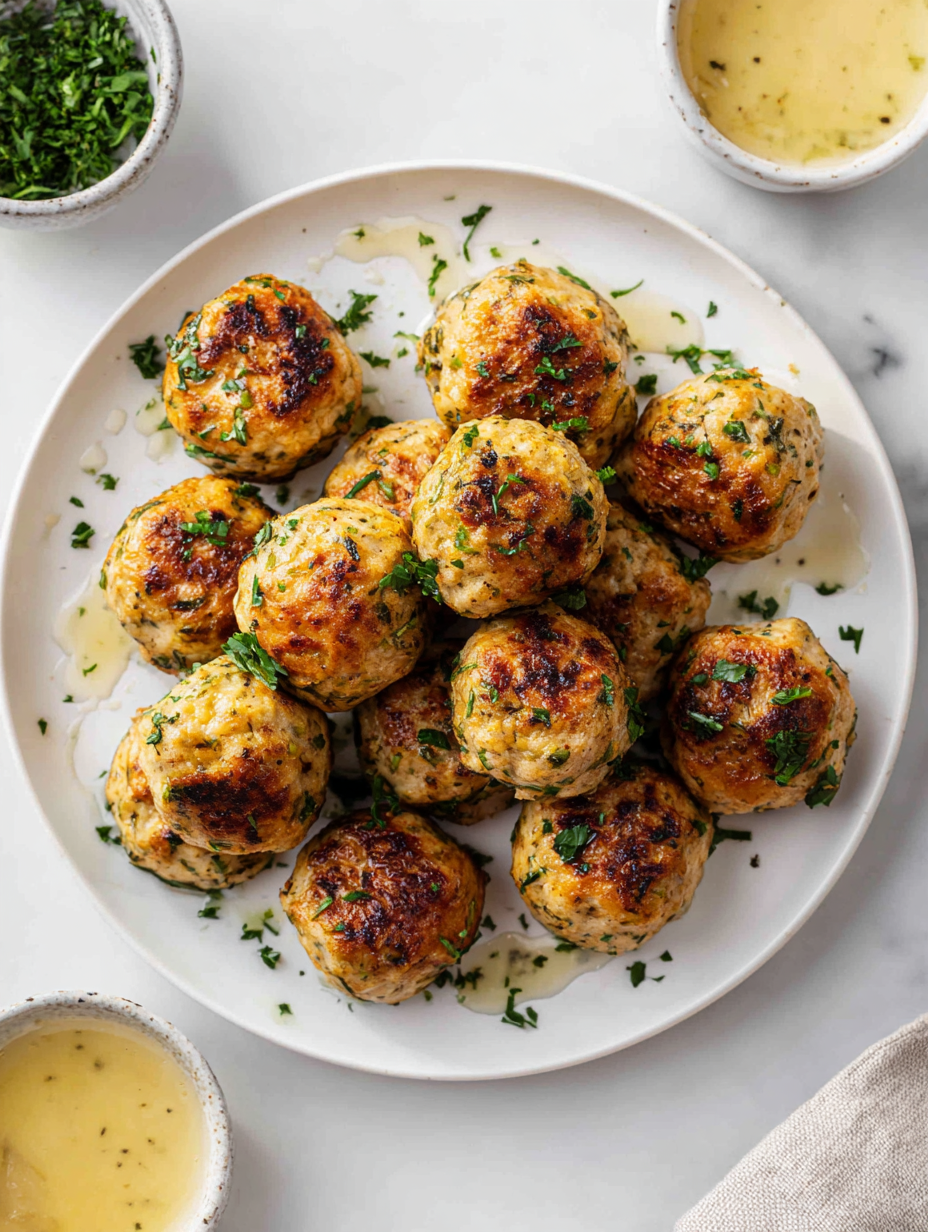
- Once baked, check for doneness by inserting a probe thermometer into a meatball; it should read 75°C (165°F). The exterior should be crispy, and the interior juicy but firm.
- Remove from oven and let rest for 5 minutes. Serve warm, with a sprinkle of fresh herbs or your favorite sauce. For extra flavor, toss in a few more herbs or a squeeze of lemon before serving.
Let the meatballs rest for 5 minutes on a plate. Finish with a sprinkle of herbs or a drizzle of sauce. Serve warm, straight from the oven or slightly cooled.
How to Know It’s Done
- Probe temperature reaches 75°C (165°F) for safety.
- Exterior is golden and crispy, with a slight jiggle inside.
- Meatballs smell savory and herbs are fragrant, indicating doneness.
Baked Chicken Meatballs
Ingredients
Equipment
Method
- Preheat your oven to 200°C (390°F) and line a baking sheet with parchment paper.
- In a large mixing bowl, combine the ground chicken, breadcrumbs, beaten egg, minced garlic, chopped parsley, salt, and black pepper. Use your hands or a spoon to gently fold everything together until just combined, being careful not to overmix to keep the meatballs tender.
- Using a tablespoon or small scoop, portion out the mixture and roll it between your palms to form smooth, round meatballs about 1.5 inches in diameter. Feel the mixture hold together but avoid pressing too tightly to maintain tenderness.
- Place the shaped meatballs evenly spaced on the prepared baking sheet. Drizzle or lightly brush the tops with olive oil for a golden, crispy exterior.
- Bake in the preheated oven for about 20-25 minutes, turning them gently halfway through to promote even browning. You'll notice the outside turning a beautiful golden color and hearing a slight sizzle from the oil.
- Check the internal temperature of a meatball with a probe thermometer; it should read 75°C (165°F). The exterior should be crisp and browned, with the interior juicy and tender.
- Remove the meatballs from the oven and let them rest for about 5 minutes. This allows the juices to redistribute, keeping them moist and flavorful when you serve.
- Garnish with additional chopped parsley if desired, and serve the meatballs warm with your favorite sauce or as part of a hearty meal.
Pro tips for perfect baked meatballs
- & uniform: Wet your hands slightly before rolling to prevent sticking and keep meatballs smooth.
- Gentle handling: Mix ingredients just until combined to keep meatballs tender and avoid dense texture.
- Even spacing: Place meatballs with space between on the baking sheet for optimal heat circulation.
- Oven temperature: Bake at 200°C (390°F) for a crisp exterior without drying out the inside.
- Turning halfway: Gently flip meatballs after 10-12 minutes for even browning and color.
- Rest before serving: Let them sit 5 minutes outside the oven to redistribute juices and firm up.
- Crust check: Look for a golden, slightly crackly exterior—if not, bake a few more minutes, but avoid over-browning.
Common mistakes and how to fix them
- FORGOT to check internal temp → probe should read 75°C (165°F).
- DUMPED meat mixture without tasting → adjust salt/herbs before baking.
- OVER-TORCHED meatballs → lower oven temp or cover loosely with foil.
- SKIPPED resting time → let meatballs sit 5 minutes before serving for juiciness.
Quick fixes and pantry swaps
- When in doubt, splash a little lemon juice to brighten flavors in seconds.
- If meatballs stick, patch with a light coating of oil on your hands for easier rolling.
- Over-browned edges? Shield with foil and lower oven temp for a gentle finish.
- Dumped too much oil? Blot with paper towels before serving to prevent greasiness.
- When meatballs lack moisture, rescue with a quick brush of melted butter or broth, smell for richness.
Prep, store, and reheat tips
- Prepare the meatball mixture up to 1 day in advance. Cover and refrigerate; the flavors meld and intensify overnight, making the shaping easier and the meatballs more flavorful.
- Shape and bake the meatballs ahead of time. Let them cool completely, then store in an airtight container in the fridge for up to 3 days. Reheat in a warm oven until heated through, about 10 minutes, until they shimmer with heat and smell fragrant.
- Freeze baked meatballs for longer storage—up to 3 months. Lay them on a baking sheet to freeze individually, then transfer to a bag. Reheat directly from frozen in the oven at 180°C (350°F) for about 15 minutes, until plump and juicy inside.
- Reheating tips: For best results, avoid microwaving, which can dry out the meatballs. Instead, reheat in the oven or in a skillet with a splash of water or broth. Watch for a gentle shimmer of moisture and a slight crackle of crispy edges as signs of readiness.
Top questions about baked chicken meatballs
1. Can I use ground turkey instead?
Use lean ground chicken for a healthier option or dark meat for more juiciness. The texture and flavor will change accordingly.
2. How long should I bake the meatballs?
Bake at 200°C (390°F) for 20-25 minutes. The meatballs should be golden and firm outside, juicy inside.
3. Can I freeze baked meatballs?
Yes, you can freeze cooked or raw meatballs. Reheat in the oven until they shimmer with heat and smell fragrant.
4. How do I prevent the meatballs from becoming dense?
Mix ingredients until just combined; overmixing can make the meatballs dense and tough. Gentle handling keeps them tender.
5. How do I know when they’re cooked?
Use a probe thermometer to check for 75°C (165°F). The exterior should be golden and crispy, with a slight jiggle inside.
6. Can I add cheese or herbs?
For extra flavor, add grated Parmesan, chopped herbs, or a squeeze of lemon before baking or serving.
7. How do I shape the meatballs?
Shape the meatballs with wet hands to prevent sticking and keep them smooth. Use a small scoop for uniform size.
8. What equipment do I need?
Line your baking sheet with parchment paper for easy cleanup and even baking. Space the meatballs evenly.
9. Should I let them rest before serving?
Rest the meatballs for 5 minutes after baking. This helps juices redistribute and keeps them moist when served.
10. What if they burn or are undercooked?
If the meatballs are over-browned, cover loosely with foil and lower oven heat. For undercooked centers, bake a few more minutes.
These baked chicken meatballs are more than just a dinner option; they’re a small act of mindfulness. The process of shaping, baking, and tasting them offers a quiet moment to reconnect with simple foods and honest techniques. It’s a reminder that good cooking doesn’t need fuss or flair, just good ingredients and a bit of patience.
In a busy season or when comfort food feels right, these meatballs bring a straightforward joy. They pair well with everything from crisp salads to hearty pasta dishes or even a quick tomato sauce. Sometimes, it’s the simplest bites that leave the most lasting impression, especially when made with care and a little kitchen soul.