

This crockpot chicken stew isn’t just about lazy cooking; it’s about that quiet magic of overnight flavors melding together. I’ve always found that the slow simmer turns simple ingredients into something richer, more comforting than I ever expected. It’s the kind of meal that makes you feel cared for, even if you toss it together in the morning.
There’s a quiet sense of achievement in coming home to a house filled with the smell of herbs, tender chicken, and simmering vegetables. The stew evolves while you’re busy, and by dinner, it’s thickened into a hearty, soulful bowl that feels like a warm hug. It’s not fancy, but it’s honest, practical, and deeply satisfying.
This recipe is perfect when life is busy but you still crave something nourishing. It’s a no-fuss, set-it-and-forget-it kind of dish that quietly rewards patience. Plus, the leftovers are even better, slowly developing more depth as the flavors mingle overnight.
Focusing on how this slow-cooked chicken stew can serve as a comforting, no-fuss family meal that evolves overnight, blending flavors and creating a sense of warmth that’s hard to match with quick-cook recipes.
The story behind this recipe
- This recipe came together after a weekend of trying to get dinner on the table without much fuss but still with flavor that sticks around. I remember the first time I threw everything in the crockpot and went about my day, only to come home to a house filled with the rich aroma of herbs and slow-cooked chicken. It’s funny how simple ingredients can turn into something that feels like a little victory for busy nights.
- What started as a quick fix turned into a little tradition—something I make when I need comfort or just a break from the usual rush. There’s something about the way the flavors meld overnight that makes this stew so much more than just another chicken dish. It’s become a bit of a quiet anchor in my weekly routine.
- heading:
Ingredient breakdown: key components
- Chicken thighs: I prefer bone-in, skin-on for richer flavor and juiciness. If you want leaner, go skinless, but expect less depth.
- Carrots: I like slicing them thick so they keep some bite. Thin slices dissolve into sweetness if cooked long enough, so adjust based on texture you want.
- Onions: They melt into the broth, adding sweetness and body. Use yellow for depth or red for a milder, sweeter note, depending on your mood.
- Garlic: Fresh cloves are best—smell that pungent aroma that wakes up the stew. If pressed, it disperses evenly, but whole cloves give bursts of flavor.
- Broth: I usually use chicken stock, but vegetable broth works for a lighter, more neutral base. Keep an eye on salt—store-bought can be salty enough.
- Herbs: Bay leaves and thyme are my go-to, but a sprig of rosemary adds a piney note. Add herbs early but remove the bay leaves before serving.
- Potatoes: Yukon Golds hold their shape well, adding creamy, tender bites. Russets tend to fall apart, thickening the stew even more.
Spotlight on key ingredients
Chicken thighs:
- I prefer bone-in, skin-on for richer flavor and juiciness. If you want leaner, go skinless, but expect less depth.
- Carrots: I like slicing them thick so they keep some bite. Thin slices dissolve into sweetness if cooked long enough, so adjust based on texture you want.
- Onions: They melt into the broth, adding sweetness and body. Use yellow for depth or red for a milder, sweeter note, depending on your mood.
Herbs and aromatics:
- Garlic: Fresh cloves are best—smell that pungent aroma that wakes up the stew. If pressed, it disperses evenly, but whole cloves give bursts of flavor.
- Broth: I usually use chicken stock, but vegetable broth works for a lighter, more neutral base. Keep an eye on salt—store-bought can be salty enough.
- Herbs: Bay leaves and thyme are my go-to, but a sprig of rosemary adds a piney note. Add herbs early but remove the bay leaves before serving.
Notes for ingredient swaps
- Dairy-Free: Use coconut milk instead of cream for a rich, slightly sweet note that complements the stew’s warmth.
- Low-Sodium: Opt for homemade broth or reduce added salt to keep it light but flavorful, especially if watching salt intake.
- Gluten-Free: Ensure your broth is gluten-free and serve with rice or gluten-free bread to keep it friendly for gluten sensitivities.
- Vegetarian: Substitute chicken with hearty mushrooms or cauliflower chunks, which add umami and texture.
- Spice Levels: Add a dash of cayenne or chili flakes if you like heat; keep it mild by omitting or reducing the spice.
- Herb Variations: Swap thyme for rosemary or sage for a different aromatic punch that still feels cozy.
- Root Vegetables: Turnip or parsnips can replace carrots, adding earthy sweetness and a different texture.
Equipment & Tools
- Crockpot: Slow cooks ingredients evenly over hours, developing deep flavor.
- Sharp knife: Chops vegetables and chicken efficiently and safely.
- Cutting board: Provides a stable surface for prep work.
- Ladle: Serves the stew with ease and prevents spills.
Step-by-step guide to crockpot chicken stew
- Equipment & Tools: Gather a large crockpot, a sharp knife, a cutting board, and a ladle. The crockpot is for slow cooking, the knife and board for prep, and the ladle for serving.
- Cut the chicken thighs into bite-sized pieces. Season lightly with salt and pepper. This helps them brown slightly and develop flavor.
- Chop the onions, carrots, and celery into chunks about 1-inch thick. Keep the pieces uniform for even cooking.
- Place chicken, vegetables, garlic, and herbs into the crockpot. Pour in chicken broth until ingredients are just covered, about 4 cups.
- Set the crockpot to low and cook for 6-8 hours. The longer it simmers, the more flavors meld and the chicken becomes fall-apart tender.
- Step 5a: About 30 minutes before serving, check the stew. If vegetables are tender and chicken is breaking apart easily, it’s ready.
- Step 5b: Taste and adjust salt or add a splash of lemon juice for brightness. If too thick, stir in a bit more broth or water.
- Turn off the crockpot. Let the stew rest for 5-10 minutes so flavors settle and it thickens slightly.
- Serve hot, garnished with fresh herbs if desired. Pair with crusty bread or over rice for a filling meal.
Once cooked, turn off the crockpot and let the stew rest for 5-10 minutes. This helps the flavors meld further and slightly thickens the broth. Serve directly from the crockpot or ladle into bowls, garnished with fresh herbs if desired.
How to Know It’s Done
- Chicken is cooked through and easily shreds when tested with a fork.
- Vegetables are tender but not mushy, showing a slight jiggle when stirred.
- Stew has a rich aroma, with herbs and chicken flavor prominent and inviting.
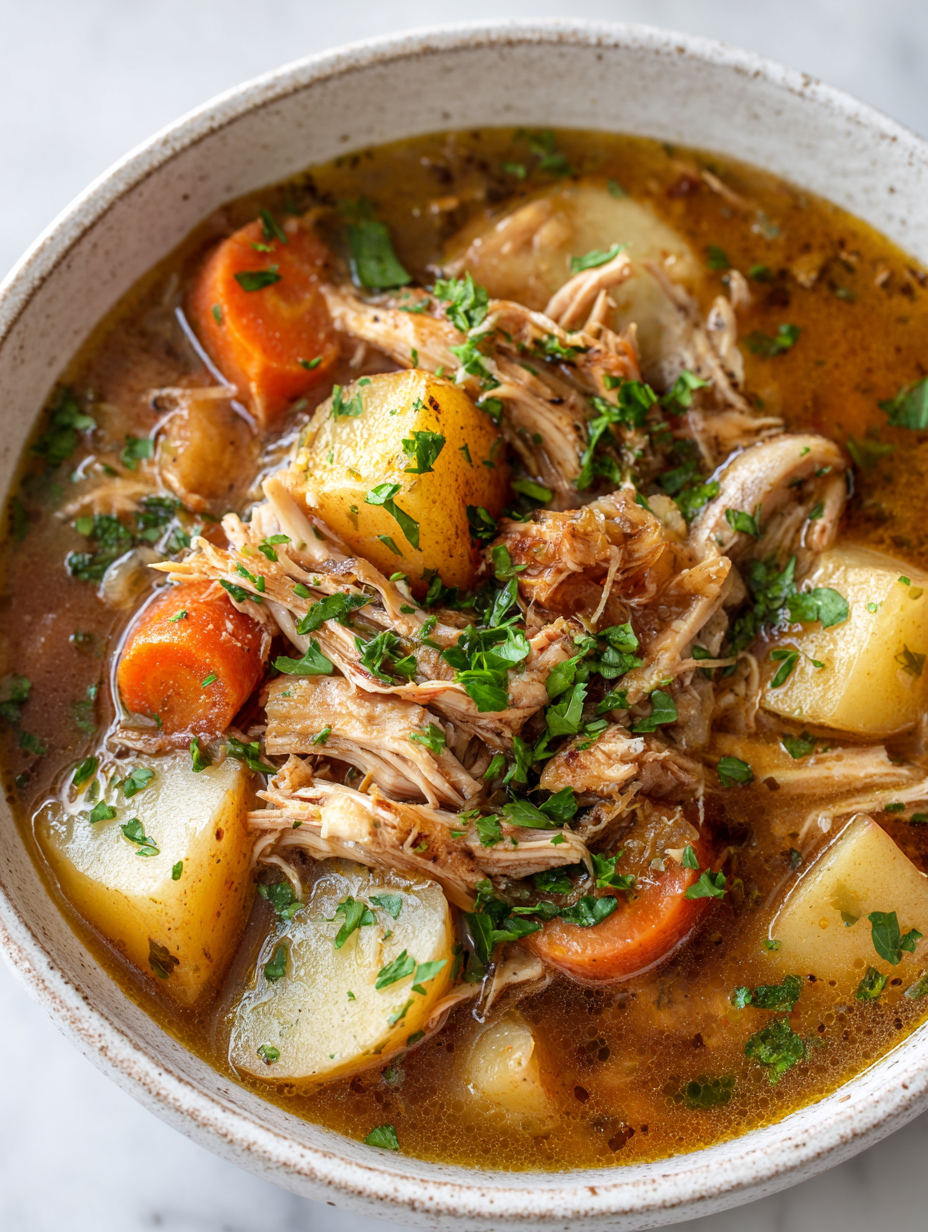
Crockpot Chicken Stew
Ingredients
Equipment
Method
- Start by chopping the onions and carrots into large chunks, and peel and chop the potatoes into bite-sized pieces. Pat the chicken thighs dry and season lightly with salt and pepper.
- Place the chicken thighs into the crockpot, then add the chopped onions, carrots, potatoes, and minced garlic around and on top of the chicken.
- Pour in the chicken broth, ensuring the ingredients are mostly covered, and add the bay leaves and thyme on top. Give everything a gentle stir to distribute the herbs.
- Cover the crockpot with the lid and set it to low. Let it cook for 6 to 8 hours—this slow simmer will turn the chicken tender and meld all the flavors into a rich broth.
- About 30 minutes before serving, check the stew. The vegetables should be tender and the chicken falling apart. Remove the bay leaves and stir gently to combine all flavors.
- Taste the broth and adjust seasoning with salt and pepper as needed. If you prefer a thicker stew, remove the lid and turn the crockpot to high for 15-20 minutes to reduce and thicken.
- Once the stew is thickened and flavors are balanced, turn off the crockpot. Let it rest uncovered for 5-10 minutes to allow the broth to settle and slightly thicken.
- Serve the hearty chicken stew hot, garnished with fresh herbs if desired. Pair it with crusty bread or a side of rice for a complete, comforting meal.
Quick Tips for Perfect Stew
- Bolded Mini-Head: Sear chicken briefly to develop richer flavor and a deeper color before slow cooking.
- Bolded Mini-Head: Use thick-cut vegetables so they hold their shape and add texture to the stew.
- Bolded Mini-Head: Add herbs early to infuse the broth, but remove bay leaves before serving for a cleaner bite.
- Bolded Mini-Head: Check liquid levels halfway; if stew looks too thin, remove the lid and simmer uncovered for a bit.
- Bolded Mini-Head: For extra depth, toss in a splash of soy sauce or Worcestershire during the last hour of cooking.
- Bolded Mini-Head: Toward the end, taste and adjust seasoning—sometimes a pinch of sugar or acid balances the broth perfectly.
Common mistakes and how to fix them
- FORGOT to brown chicken: Skipping this step makes the stew less flavorful. Sear briefly for richer taste.
- DUMPED too much liquid: Keep an eye on broth level; too much dilutes flavors. Remove excess if needed.
- OVER-TORCHED vegetables: Vegetables can become mushy and bitter if cooked too long on high. Check texture early.
- MISSED seasoning adjustment: Taste before serving; add salt or acid to balance flavors and brighten the stew.
Quick fixes and pantry swaps
- When sauce is too thin, splash in a touch of cornstarch slurry and stir until it shimmers.
- If chicken isn’t shredding easily, turn up the heat for 5 minutes to help break it apart.
- Splash a bit of lemon juice or vinegar if the stew tastes dull or flat.
- Patch over-seasoned stew with a splash of water or broth; simmer gently to dilute excess salt.
- Shield delicate vegetables by adding them later if you notice they’re overcooking and turning mushy.
Prep, store, and reheat tips
- Prep ingredients like chopping vegetables and seasoning chicken the night before. The aroma of sliced onions and herbs will energize your fridge.
- Store the prepared ingredients in airtight containers for up to 24 hours. The flavors will intensify slightly overnight, adding depth to your stew.
- Cooked stew keeps well in the fridge for 3-4 days. Reheat gently on the stove until it shimmers and smells inviting, about 5 minutes over medium heat.
- For longer storage, freeze in portions for up to 3 months. Thaw overnight in the fridge, then reheat until steaming hot, with a rich, aromatic aroma intact.
Top questions about Crockpot Chicken Stew
1. Can I use chicken breasts instead of thighs?
Use bone-in thighs for more flavor, but skinless works if you prefer less fat. The skin adds richness as it cooks down, creating a more velvety broth.
2. How long should I cook the stew in the crockpot?
Cooking on low for 6-8 hours ensures tender meat and melded flavors. Longer can make everything fall apart, so check texture if you leave it overnight.
3. When should I add the vegetables?
Add vegetables at the start for a soft, integrated texture. If you want some bite, toss in more sturdy veggies like potatoes closer to the end of cooking.
4. Do I need to remove the bay leaves before serving?
Stir in fresh herbs at the end for bright flavor. Bay leaves should be removed before serving—they add aroma but not texture.
5. How can I thicken the stew if it’s too thin?
If stew is too watery, remove the lid and cook on high for 15-20 minutes to thicken. For a creamier stew, stir in a bit of cream or flour slurry at the end.
6. How long can I store leftovers?
Leftovers last 3-4 days in the fridge. Reheat on the stove until it shimmers and the aroma is warm and inviting, about 5-7 minutes.
7. Can I freeze the stew?
Yes, you can freeze it in portions for up to 3 months. Thaw overnight in the fridge and reheat until steaming and fragrant.
8. How do I fix bland or under-seasoned stew?
Adjust salt and seasoning after cooking. A splash of lemon juice or vinegar can brighten flavors if it tastes dull.
9. Can I use garlic powder instead of fresh?
Use fresh garlic for a pungent aroma. If pressed, it disperses evenly, but whole cloves give bursts of flavor. Sauté briefly if you want a mellow note.
10. What vegetables work best in this stew?
Choose hearty vegetables like carrots, potatoes, and onions for a balanced, filling stew. Softer veggies like peas should be added at the end to keep their color and texture.
This crockpot chicken stew isn’t just about simplicity; it’s about that quiet, satisfying aroma that fills the house overnight. When you come home to tender, flavorful chicken and rich vegetables, it’s a small reminder that slow, honest cooking still matters. It’s the kind of dish that makes a busy day feel a little more manageable, a little more nourishing.
In the end, it’s these humble, slowly built flavors that stick with you. Whether it’s a weekday dinner or a lazy weekend meal, this stew quietly becomes part of your routine—comforting, practical, and unpretentiously good.