

This crockpot chicken stew isn’t just about getting dinner on the table; it’s about creating a little Sunday ritual that slows everything down. The house fills with the cozy smell of cooked chicken, tender vegetables, and herbs that make the whole space feel like a warm embrace. It’s a way to turn simple ingredients into a comforting, honest meal without fuss.
There’s something about the quiet process—dicing vegetables, layering ingredients—that helps me reconnect with what cooking used to be before all the rush. Filling the crockpot in the morning means I get to come back to a meal that’s been quietly developing all day, tasting just right, with flavors that deepen as they simmer. It’s a small act of mindfulness that turns a weekday dinner into a moment of calm and care.
Focusing on how this crockpot chicken stew can be a stress-relieving, Sunday-afternoon ritual that fills the house with warm, inviting smells while allowing me to slow down and reconnect with simple, honest cooking.
The story behind this recipe
- This recipe was born out of a busy weekend when I needed something honest and forgiving. I wanted a meal that could simmer quietly while I tackled other chores, filling the house with that familiar, comforting aroma of cooked chicken and root vegetables. It’s a dish that reminds me of Sunday afternoons in my childhood, when the kitchen always had a warm, welcoming hum.
- One chilly morning, I tossed everything into the crockpot without much fuss, just a handful of vegetables, chicken thighs, and a splash of broth. I didn’t expect much, honestly. But by late afternoon, the house smelled like a cozy refuge—rich with spices and a slightly smoky undertone from the caramelized edges of the chicken. That’s when I realized this simple stew had become my go-to for those hectic days when I need warmth and ease, no fuss involved.
- heading: ‘The story behind this recipe’
Ingredient breakdown: key components
- Chicken thighs: I love using bone-in, skin-on thighs—they stay juicy and add rich flavor, but boneless works fine if you prefer less fuss.
- Carrots: The natural sweetness of carrots really shines through as they cook down; you can swap for parsnips if you want a slightly earthier note.
- Potatoes: I prefer Yukon Gold for their buttery texture, but Russets will give you a softer, fluffier stew—just cut them a bit smaller.
- Onions and garlic: The aromatic base—onions become sweet and mellow, garlic adds a punch. Skip garlic if you’re sensitive, but don’t skip the onions.
- Vegetable broth: Opt for low-sodium to control salt, but if you want more depth, add a splash of white wine or a dash of soy sauce.
- Herbs and seasonings: Thyme and bay leaves are my staples—they infuse the stew with warmth. Fresh herbs add brightness, but dried works in a pinch.
- Optional peas or green beans: Toss in near the end for a pop of color and freshness. If you’re out, a handful of frozen corn or peas works just as well.
Spotlight on key ingredients
Chicken thighs:
- I love using bone-in, skin-on thighs—they stay juicy and add rich flavor, but boneless works fine if you prefer less fuss.
- Carrots: The natural sweetness of carrots really shines through as they cook down; you can swap for parsnips if you want a slightly earthier note.
- Potatoes: I prefer Yukon Gold for their buttery texture, but Russets will give you a softer, fluffier stew—just cut them a bit smaller.
Vegetables and seasonings:
- Onions and garlic: The aromatic base—onions become sweet and mellow, garlic adds a punch. Skip garlic if you’re sensitive, but don’t skip the onions.
- Vegetable broth: Opt for low-sodium to control salt, but if you want more depth, add a splash of white wine or a dash of soy sauce.
- Herbs and seasonings: Thyme and bay leaves are my staples—they infuse the stew with warmth. Fresh herbs add brightness, but dried works in a pinch.
Notes for ingredient swaps
- Dairy-Free: Use coconut cream instead of heavy cream for a rich, dairy-free finish that adds a slight tropical aroma.
- Vegetable Broth: Swap for mushroom broth to boost umami depth, or use water with extra herbs if you’re out of stock.
- Chicken: Replace with turkey thighs for a leaner, slightly gamier flavor—still tender and hearty.
- Potatoes: Sweet potatoes work beautifully if you want a touch of sweetness and a vibrant orange hue.
- Herbs: Fresh thyme can be swapped for rosemary or sage, but use sparingly—they’re more pungent.
- Vegetables: Swap carrots for parsnips or daikon for a milder, earthier sweetness or a crunchier texture.
- Green Beans: Use frozen peas or corn for quick color and freshness, especially if you’re out of green beans.
Equipment & Tools
- large crockpot: cooks everything slowly and evenly.
- sharp knife: dices vegetables and trims chicken.
- cutting board: provides a safe surface for prep.
- measuring spoons: ensures accurate seasoning.
- spoon for stirring: mixes ingredients during cooking.
Step-by-step guide to crockpot stew
- Gather your equipment: large crockpot, sharp knife, cutting board, measuring spoons, and a spoon for stirring.
- Prep the ingredients: dice carrots, potatoes, and onions into bite-sized pieces. Pat dry chicken thighs if using fresh.
- Layer the vegetables: place carrots, potatoes, and onions at the bottom of the crockpot for even cooking.
- Add the chicken: lay the thighs on top of the vegetables. Season generously with salt, pepper, and thyme.
- Pour in broth: cover the ingredients with about 4 cups of vegetable or chicken broth. Add bay leaves for aroma.
- Set the crockpot: turn to low and cook for 6-8 hours. You’ll know it’s ready when the chicken is tender and falling apart.
- Check midway: after 3-4 hours, give it a gentle stir. If the stew looks too thick, add a splash of water or broth.
- Final touches: about 30 minutes before serving, remove the bay leaves. If desired, stir in frozen peas or green beans for color.
- Rest and serve: turn off the crockpot. Let it sit for 5 minutes to settle. Serve hot, with crusty bread if you like.
Once cooked, turn off the crockpot and let the stew rest for 5 minutes. Serve directly from the pot, garnished with fresh herbs if desired. This step helps flavors meld and makes serving easier.
How to Know It’s Done
- Chicken easily pulls apart with a fork, internal temp around 75°C (165°F).
- Vegetables are tender but not mushy, with a slight caramelization around edges.
- Stew is bubbling gently without boiling over, and smells rich and savory.
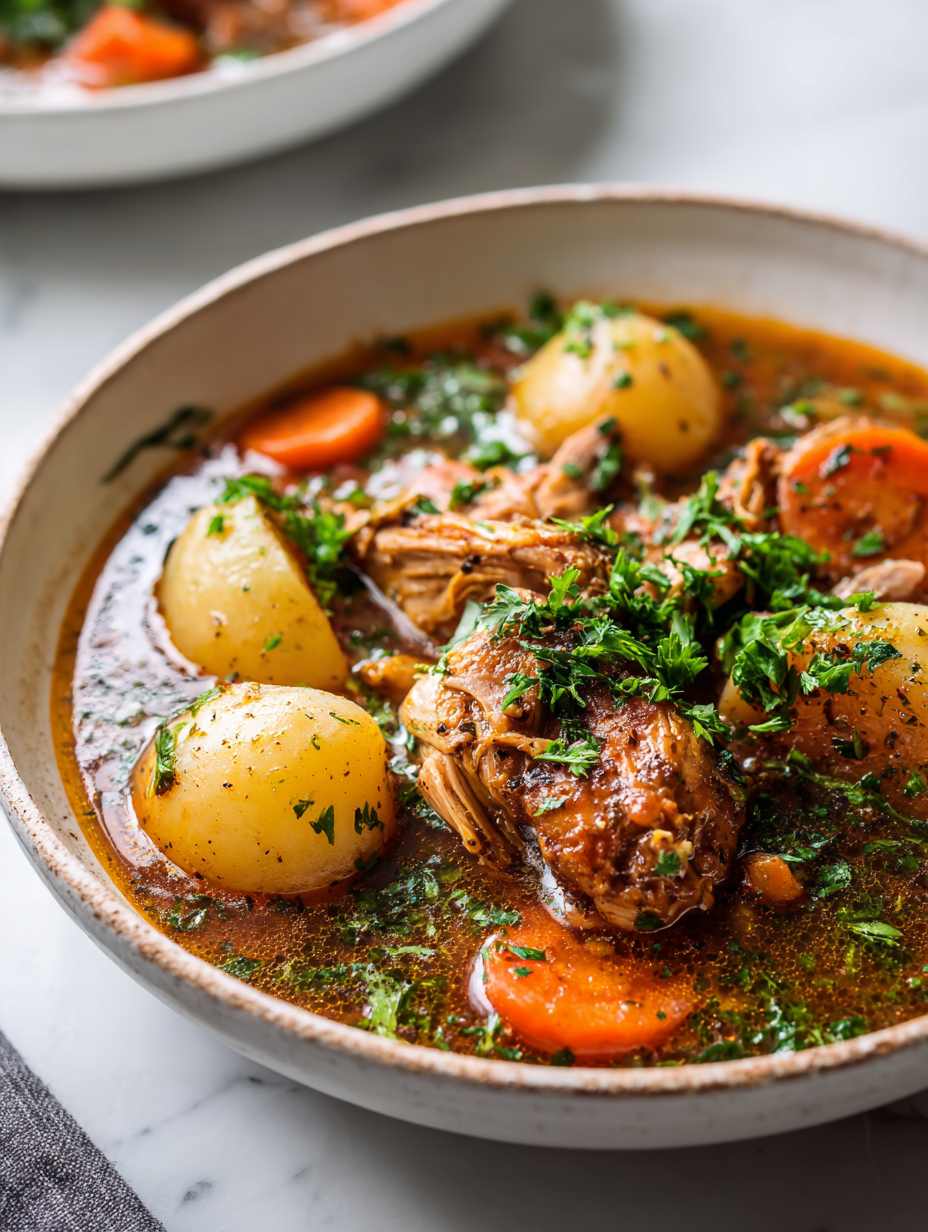
Crockpot Chicken Stew
Ingredients
Equipment
Method
- Start by gathering all your ingredients: a sharp knife, cutting board, measuring spoons, and a large crockpot.
- Dice the carrots, potatoes, and onion into roughly bite-sized pieces, and mince the garlic. Pat dry the chicken thighs if needed.
- Layer the chopped vegetables at the bottom of the crockpot — this helps everything cook evenly and allows the flavors to meld.
- Place the chicken thighs on top of the vegetables, then season generously with salt, pepper, and fresh thyme.
- Pour the vegetable broth over all the ingredients, making sure they’re mostly submerged, and tuck in the bay leaves for aroma.
- Cover the crockpot with its lid, set it to low, and let it cook for 6 to 8 hours until the chicken is tender and falling apart, and the vegetables are soft and flavorful.
- After about 3 to 4 hours, give the stew a gentle stir to help the flavors combine and prevent sticking on the bottom.
- About 30 minutes before serving, add the frozen peas or green beans on top, then cover again and let them cook just until heated through.
- Remove the bay leaves and taste the stew, adjusting salt and pepper as needed. The chicken should be tender enough to shred easily with a fork.
- Turn off the crockpot and let the stew rest for about 5 minutes. This allows the flavors to settle and makes serving easier.
- Spoon the hearty stew into bowls and enjoy the warm, comforting aroma and tender textures that make this dish a perfect cozy meal.
Pro tips for perfect crockpot stew
- Bolded Mini-Head: Sear the chicken briefly before adding to the crockpot for extra flavor and a richer color.
- Bolded Mini-Head: Chop vegetables uniformly; even pieces cook more evenly and look prettier in the stew.
- Bolded Mini-Head: Use fresh herbs if possible; they release their aroma more vividly during slow cooking.
- Bolded Mini-Head: Keep the lid on until the final hour to trap flavors, then uncover for a quick boost of aroma.
- Bolded Mini-Head: If stew looks too thick, stir in a splash of hot water or broth to loosen it without diluting flavor.
- Bolded Mini-Head: For a smoky undertone, add a dash of smoked paprika or a small piece of smoked sausage.
- Bolded Mini-Head: Let the stew rest for 5 minutes after cooking; this helps flavors settle and makes serving easier.
Common mistakes and how to fix them
- FORGOT to check chicken temperature → Use a probe to ensure 75°C (165°F).
- DUMPED ingredients too early → Let stew sit 5 minutes before serving to meld flavors.
- OVER-TORCHED vegetables → Remove from heat immediately if they start browning or burning.
- MISSED stirring midway → Stir gently at 4-hour mark for even cooking and prevent sticking.
Quick fixes and pantry swaps
- When stew looks too thick, splash in hot water and stir gently to loosen textures.
- If vegetables are mushy, reduce cooking time next round, or add them later in the process.
- Splash a bit of lemon juice or vinegar if stew tastes flat or dull in flavor.
- Patch a burnt bottom by carefully scooping the unburned stew into a new pot, leaving behind the burnt bits.
- Shield the stew from over-torching by turning down to low if you notice browning around edges.
Prep, store, and reheat tips
- Prep vegetables: Dice carrots, potatoes, and onions a day ahead; store in airtight container in the fridge—crisp and ready to go.
- Brown chicken thighs briefly if desired: Can be done a few hours before, then kept covered in the fridge for deeper flavor.
- Store leftovers: Keep cooled stew in a sealed container for up to 3 days; the flavors intensify overnight, becoming more comforting.
- Reheat carefully: Gently warm on the stovetop over medium-low heat, stirring occasionally, until steaming and fragrant—smells like home.
- Freezing: Portion into freezer-safe containers for up to 3 months; the stew thickens slightly after freezing, so stir in a splash of broth during reheating.
Common questions about crockpot chicken stew
1. Can I use boneless chicken thighs?
Use bone-in, skin-on thighs for juicier, more flavorful chicken. Boneless can work too, but may be a bit drier.
2. Can I use chicken breasts instead?
Yes, you can substitute chicken breasts, but they tend to be leaner and may dry out if overcooked.
3. How do I know when the vegetables are done?
Vegetables should be tender but not mushy. Check after 6 hours; they should easily break apart with a fork.
4. Can I add frozen vegetables?
Yes, frozen vegetables like peas or green beans can be added near the end for freshness and color.
5. What if the stew is too thick?
If the stew is too thick, stir in a little hot broth or water to loosen it up without losing flavor.
6. Can I use different broth types?
Use low-sodium broth to control salt; add a splash of white wine or soy sauce for more depth.
7. Can I prep this ahead of time?
Yes, you can prepare everything the night before, store in the fridge, and assemble in the morning.
8. How long can I store leftovers?
Leftovers keep well in the fridge for 3 days or in the freezer for 3 months. Reheat on the stove until steaming.
9. What if my vegetables burn?
To fix over-torched vegetables, remove the pot from heat immediately and discard any burnt bits, then continue cooking the rest.
10. How do I tell if the chicken is done?
Always check chicken for an internal temp of 75°C (165°F). The meat should be easily shredded and juicy.
This stew is more than just a comforting meal; it’s a reminder to slow down and savor simple, honest cooking. Filling the house with its rich aroma, it invites everyone to gather around and share in the quiet joy of a well-made, home-cooked dish.
In these busy times, having a recipe that’s forgiving and satisfying feels like a small victory. It’s a humble, practical reminder that good food doesn’t have to be complicated to be meaningful.