

There’s something beautifully effortless about making soup in the crockpot. You toss in a handful of pantry staples—ripe tomatoes, garlic, a splash of broth—and forget about it for a few hours. When you come back, you’re greeted by an aroma that’s both warm and unexpectedly complex, thanks to the slow simmering that develops deep, layered flavors without much fuss.
This recipe feels like a small act of rebellion against the hurried pace of modern cooking. It’s honest, straightforward, and relies on the crockpot’s quiet magic. The best part? It’s perfect for those days when you want comfort but don’t want to spend your time hovering over a stove, stirring and tasting every ten minutes. Instead, you set it, forget it, and enjoy the rich, velvety soup once it’s ready.
Focusing on the surprising depth of flavor you can achieve with minimal effort by letting the crockpot do all the work, turning simple ingredients into a rich, comforting soup without constant stirring or supervision.
The story behind this recipe
This recipe came about on a chilly fall day when I was craving something hearty but didn’t want to fuss over a stove. I had a bunch of ripe tomatoes that needed using, and I figured, why not let the crockpot do its thing? The slow simmer turned them into something richer and more complex than I expected—like a warm hug in a bowl. It’s become my go-to when I want comfort without the chaos of last-minute prep.
Ingredient breakdown: key components
- Fresh ripe tomatoes: I love the burst of sweetness and acidity; if yours are too watery, roast or drain first to concentrate the flavor.
- Garlic: I crush and toss it in whole for a mellow, almost nutty aroma; if you prefer a punch, mince it finely before adding.
- Vegetable broth: I use homemade when I have it, but store-bought works fine; if you want a richer soup, add a splash of cream at the end.
- Onion: I caramelize it slightly before adding for depth; skip this step for a quicker, lighter version that’s still flavorful.
- Olive oil: I drizzle a bit in at the start to mellow the garlic and onions; for a lighter soup, reduce the oil or skip it entirely.
- Salt & pepper: I season gradually, tasting as I go, to find that perfect balance of savory and bright; don’t over-salt early—remember, flavors intensify as it cooks.
- Fresh basil or herbs: I add at the end to keep their vibrant aroma; if you want an infused flavor, toss in sprigs early, then remove before blending.
Spotlight on key ingredients
Tomatoes:
- Fresh ripe tomatoes: I love the burst of sweetness and acidity; if yours are too watery, roast or drain first to concentrate the flavor.
- Garlic: I crush and toss it in whole for a mellow, almost nutty aroma; if you prefer a punch, mince it finely before adding.
- Olive oil: I drizzle a bit in at the start to mellow the garlic and onions; for a lighter soup, reduce the oil or skip it entirely.
Garlic:
- I love its mellow, nutty aroma during slow cooking, softening and sweetening as it melds with the tomatoes.
- Olive oil: It coats the ingredients, helping to mellow sharpness and add a subtle richness, especially when heated gently.
- Behavior: When cooked slowly, garlic releases its sweetness, balancing the acidity of the tomatoes and creating a layered flavor profile.
Notes for ingredient swaps
- Dairy-Free: Use coconut milk or cashew cream instead of heavy cream for richness without dairy, keeping the soup velvety and smooth.
- Vegan: Swap chicken broth for vegetable broth and skip the cream; add a splash of olive oil for depth and a silky finish.
- Low-Sodium: Choose no-salt added broth and season gradually; you can always add salt at the end to control the flavor.
- Fresh Herbs: Replace basil with oregano or thyme if you prefer a more robust, earthy aroma that holds up during slow cooking.
- Sweetness: Add a teaspoon of honey or maple syrup if your tomatoes are tart; this brightens the soup without overpowering the natural flavor.
- Tomatoes: Use fire-roasted canned tomatoes for a smoky twist, or fresh heirloom tomatoes in season for a sweeter, more vibrant taste.
- Onions: Substitute leeks or shallots for a milder, sweeter onion flavor that develops beautifully during slow cooking.
Equipment & Tools
- Large crockpot: To slow cook the ingredients evenly over several hours.
- Immersion blender or regular blender: For pureeing the soup to a silky smooth consistency.
- Ladle: To transfer hot soup safely for blending or serving.
- Measuring spoons and cups: To measure liquids and seasonings accurately.
Step-by-step guide to tomato soup
- Gather your equipment: a large crockpot, immersion blender or regular blender, and a ladle. Set everything within reach.
- Prep the tomatoes: if using fresh, roughly chop 4 pounds of ripe tomatoes. If canned, drain excess juice. For a richer flavor, roast them at 200°C (400°F) for 20 minutes beforehand.
- Add ingredients to crockpot: place tomatoes, 4 cloves of garlic (whole), 1 diced onion, 2 cups vegetable broth, and 2 tablespoons olive oil into the crockpot. Season with salt and pepper.
- Cook on low: set the crockpot to low for 6-8 hours. During this time, your kitchen will fill with a sweet, roasted aroma. If you notice the tomatoes bubbling vigorously, turn it to the lowest setting or add a splash of water.
- Check for doneness: after 6 hours, the tomatoes should be very soft, and the mixture smells deeply savory. If they aren’t quite there, cook for another 1-2 hours.
- Blend the soup: carefully transfer the hot contents to a blender or use an immersion blender directly in the crockpot. Puree until smooth, tasting and adjusting seasoning as needed.
- Finish the soup: return the blended soup to the crockpot (if needed). Stir in a splash of cream or a handful of fresh basil. Warm for another 10 minutes until everything is heated through and fragrant.
- Rest and serve: let the soup sit for 5 minutes before ladling into bowls. Garnish with extra basil, a drizzle of olive oil, or croutons if desired. Serve hot.
Allow the soup to rest for five minutes after blending, then ladle into bowls. Garnish with fresh herbs or a swirl of cream for a touch of brightness.
How to Know It’s Done
- Color: soup should be a vibrant, rich red with no raw tomato streaks.
- Aroma: fragrant with roasted garlic and sweet tomatoes, indicating flavors have melded.
- Texture: smooth and velvety when pureed, without lumps or watery patches.
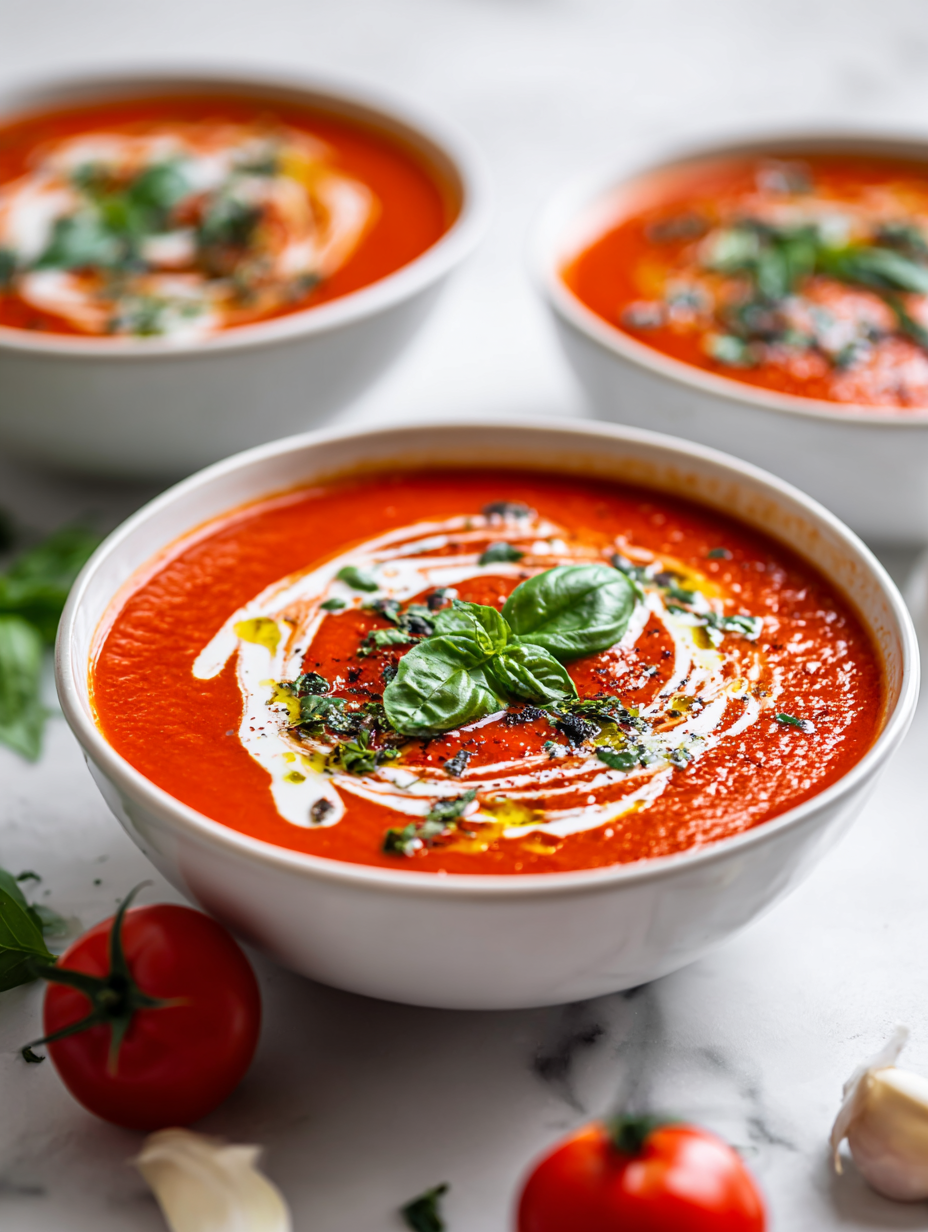
Crockpot Tomato Soup
Ingredients
Equipment
Method
- Chop the onion and prepare the garlic, peeling and keeping whole or crushing depending on your preference.
- Pour olive oil into the crockpot and add the diced onion along with the whole garlic cloves. Sauté on high for 10 minutes until the onion becomes translucent and fragrant.
- Add the ripe tomatoes to the crockpot, along with a pinch of salt and pepper. Cover with vegetable broth and stir to combine.
- Set the crockpot to low and cook uncovered for 6 to 8 hours, allowing the flavors to meld and the tomatoes to soften into a rich, fragrant mixture.
- Once the cooking time is up, carefully transfer the hot mixture to a blender using a ladle, then blend until smooth and velvety. Alternatively, use an immersion blender directly in the crockpot.
- Pour the pureed soup back into the crockpot if needed, and stir in chopped fresh basil or herbs. Warm for another 10 minutes until heated through and fragrant.
- Taste the soup and adjust seasoning with more salt, pepper, or herbs as desired. Serve hot in bowls, garnished with extra basil or a drizzle of olive oil for extra flavor.
Tips for perfect crockpot tomato soup
- BOLD MINIMALIZE: Use a small amount of oil to help garlic soften without burning, avoiding bitter flavors.
- SMELL CHECK: When ingredients start to smell sweet and fragrant, it’s time to check for doneness before blending.
- SENSOR ALERT: The soup should be a vibrant red, not dull or burnt; adjust heat if color dulls or darkens.
- LID ON: Keep the lid on during slow cooking to trap flavors and prevent evaporation—your tomatoes will caramelize better.
- BLEND CAREFULLY: Use an immersion blender for safety and ease; blend directly in the crockpot until silky smooth.
- TASTE OFTEN: Season gradually, tasting after each addition of salt or herbs—slow cooking deepens flavors, so adjust accordingly.
- FINAL GARNISH: Finish with a drizzle of olive oil or fresh herbs right before serving to add brightness and texture.
Common mistakes and how to fix them
- FORGOT to adjust heat: If soup looks scorched, turn to low and add water.
- DUMPED too much salt: Rinse tomatoes before adding, or add sugar to counteract saltiness.
- OVER-TORCHED the garlic: Add garlic later if you notice it browning too quickly.
- MISSED blending: If soup isn’t smooth, blend longer or strain for a silky texture.
Quick fixes and pantry swaps
- When soup tastes flat, splash in a dash of vinegar or lemon juice for brightness.
- If the soup is too thick, add hot water or broth and stir gently until smooth.
- Splash a little cream or milk when the soup shimmers to soften acidity and add richness.
- Patch over burnt spots by scooping out unaffected soup and adding fresh tomatoes.
- When in doubt, swap canned tomatoes for roasted ones to deepen smoky flavor.
Prep, store, and reheat tips
- Prep the tomatoes: chop or crush ahead, store in an airtight container in the fridge for up to 24 hours. The aroma will be fresh and slightly sweet when you start cooking.
- Make the broth mixture: combine garlic, onion, and seasonings a day in advance. Keep chilled; flavors will deepen overnight, making the soup even more fragrant.
- Refrigerate leftovers promptly: store cooled soup in a sealed container for up to 3 days. The aroma will intensify slightly, and the color may deepen with time.
- Reheat gently: warm the soup on the stove over low heat, stirring occasionally. Expect a velvety, fragrant aroma and a smooth, steaming texture after reheating.
- Freeze for longer storage: transfer cooled soup into freezer-safe containers for up to 3 months. Thaw overnight in the fridge, then reheat until fragrant and piping hot.
Top questions about crockpot tomato soup
1. Can I use canned tomatoes?
Use ripe, flavorful tomatoes for the best taste. Canned or fresh, both work well, but fresh should be very ripe and juicy. The aroma when cooking will be rich and slightly sweet.
2. Can I use fresh tomatoes instead of canned?
Yes, canned tomatoes work great and save you time. Look for fire-roasted for a smoky depth, or plain for a sweeter flavor. The soup will still be vibrant and tasty.
3. How do I prepare fresh tomatoes?
Absolutely. Just chop them roughly and add a bit more cooking time if they’re very firm. The flavor develops slowly, so give it time for the best depth.
4. How do I blend the soup?
You can blend the soup directly in the crockpot using an immersion blender or transfer to a regular blender carefully. Puree until silky smooth, feeling the texture change from chunky to velvety.
5. How do I season the soup?
Adjust seasoning at the end, tasting for salt, pepper, and herbs. If it’s too acidic, a pinch of sugar or a splash of cream can balance it out, making the aroma round and inviting.
6. How long does it last in the fridge?
Store leftovers in an airtight container in the fridge for up to 3 days. Reheat gently on the stove until steaming and fragrant, with a rich, velvety texture restored.
7. Can I freeze this soup?
Yes, freeze in freezer-safe containers for up to 3 months. Thaw overnight in the fridge, then reheat until steaming and aromatic, adjusting seasoning if needed.
8. What heat setting should I use?
Use a low setting on your crockpot, around 95°C (200°F), to prevent burning. The slow simmering will develop deep flavors without scorching the tomatoes or garlic.
9. What if the soup is too thick?
If your soup is too thick, add a splash of hot water or broth and stir gently. It should shimmer with a smooth, velvety consistency and smell invitingly roasted and sweet.
10. What if the soup is bland?
If the soup tastes flat, add a splash of vinegar or lemon juice. For a quick fix, stir in a teaspoon of honey or maple syrup for a balanced, vibrant flavor.
Making this crockpot tomato soup has become my go-to when I need comforting, no-fuss meals. The slow simmer deepens the flavors, filling the house with a warm, roasted aroma that’s hard to resist.
It’s a simple recipe, but it reminds me that sometimes, the best flavors come from letting ingredients do their thing quietly. Perfect for cozy nights or when you want something rich and honest without much effort.