

This crockpot vegetable stew isn’t just about effortless cooking; it’s about how slow, gentle heat turns simple veggies into something unexpectedly rich and comforting. I love tossing everything in the morning and coming home to a house filled with a savory, smoky aroma that promises warmth and nourishment. It’s a kind of magic that happens when you let ingredients mingle and stew for hours, releasing their flavors slowly and deeply.
There’s a nostalgic charm in this recipe. It reminds me of chilly weekends when my mom would throw together a big pot of stew after a day outside. The smell of simmering carrots, potatoes, and tomatoes fills the kitchen with a sense of calm and home. It’s honest, no-fuss cooking that’s perfect for busy days or when you just want to keep things simple but flavorful.
This recipe focuses on how a slow cooker can transform humble vegetables into a deeply flavored, cozy stew that feels like a warm hug on chilly days. It’s about embracing simplicity and the magic of slow heat to coax out every ounce of flavor from everyday ingredients.
The story behind this recipe
This recipe came together one chilly weekend when I was craving something hearty but didn’t want to spend hours in the kitchen. I threw together whatever vegetables I had on hand—carrots, potatoes, a bit of zucchini—and let the slow cooker do its thing. The smell that filled the house was unexpectedly rich and smoky, reminding me of simpler times when dinner was just about filling the belly and warming the bones. It’s become my go-to for those busy days when I want something nourishing without the fuss.
Ingredient breakdown: key components
- Carrots: I like mine slightly sweet and tender, so I chop them into thick rounds. You could peel and dice for faster softening.
- Potatoes: They soak up all the flavors and get creamy if cooked long enough. Russets are great, but Yukon Gold adds a buttery touch.
- Canned tomatoes: I prefer crushed for a rich, smoky base. If you only have diced, just mash them up a bit before tossing in.
- Bell peppers: They add a pop of color and a zing of sweetness. Use any color, but red peppers give a deeper, smoky flavor after slow cooking.
- Vegetable broth: I always go for low-sodium so I can control the salt. Chicken broth works too if you’re not vegetarian, for extra depth.
- Herbs & spices: I toss in a bay leaf and a sprig of thyme—simple but essential. Feel free to add a pinch of smoked paprika for earthy warmth.
- Onions & garlic: These build the base’s aroma. Chop the onions small so they break down nicely, releasing their sweet, savory scent.
Spotlight on key ingredients
Carrots and Potatoes:
- Carrots: I love how they become sweet and tender, almost melting into the stew. Their vibrant orange hue also brightens the dish visually.
- Potatoes: They soak up flavors and turn creamy if cooked long enough. Yukon Golds add a buttery richness, while Russets give a fluffier texture.
Notes for ingredient swaps
- Dairy-Free: Coconut milk adds creaminess and a subtle sweetness, but it changes the richness and flavor profile. Consider a splash of almond cream if you prefer nutty notes.
- Low-Sodium: Use homemade broth or omit added salt altogether. The vegetables and herbs will still lend plenty of flavor, making it gentler on your sodium intake.
- Gluten-Free: Ensure any broth or seasoning blends are certified gluten-free. Most basic broths are naturally gluten-free, but double-check if you’re sensitive.
- Vegetarian/Vegan: Swap in vegetable broth and skip any animal-based seasonings. Add a splash of soy sauce or miso for umami depth without compromise.
- Root Vegetables: Turnips or parsnips work beautifully, offering a slightly different sweetness or earthiness. They also soften well over slow cooking times.
- Herbs: Fresh thyme or rosemary can be replaced with dried versions—use about a third of the fresh amount for a similar punch. Both add aromatic warmth.
- Tomatoes: Use fire-roasted canned tomatoes for a smoky, charred flavor that deepens the stew’s richness. If unavailable, regular crushed tomatoes do the trick.
Equipment & Tools
- Slow cooker: Main cooking vessel, provides gentle, even heat.
- Chef’s knife: Chopping vegetables and herbs efficiently.
- Cutting board: Work surface for prep.
- Ladle: Serving the stew hot and easy.
- Wooden spoon: Stirring ingredients without scratching the crock.
Step-by-step guide to vegetable stew
- Gather all your ingredients: chopped vegetables, herbs, broth, and spices. Make sure everything is prepped and within reach.
- Set your slow cooker to low heat. Use a 4-6 quart size for even cooking and easy stirring.
- Start by placing the root vegetables—carrots, potatoes, and parsnips—at the bottom. They take the longest to soften.
- Add chopped bell peppers, zucchini, and tomatoes on top. Stir gently to combine with the root vegetables.
- Pour in vegetable broth, enough to just cover the veggies. For richer flavor, add a splash of soy sauce or a teaspoon of smoked paprika.
- Toss in garlic and onion, along with bay leaf and thyme sprig. Season with salt and pepper to taste.
- Cover the lid and cook on low for 6-8 hours. Or on high for 3-4 hours if you’re short on time.
- Halfway through, open the lid briefly to stir. Check for even cooking and that veggies are tender.
- As the stew nears readiness, smell for a deep, aromatic mixture with hints of sweetness and smoky herbs. If it smells flat, add a pinch more salt or herbs.
- Once the vegetables are soft and fragrant, turn off the slow cooker. Let it rest uncovered for 10-15 minutes to settle flavors.
- Remove the bay leaf and thyme sprig. Taste again and adjust salt or spice if needed. Finish with a drizzle of olive oil or lemon juice for brightness.
- Serve hot, with crusty bread or over grains. The stew should be thick, with vegetables breaking down slightly, and a rich, savory aroma.
Let the stew sit uncovered for 10-15 minutes. Remove herbs, taste for seasoning, and drizzle with olive oil or lemon juice. Serve with warm bread or over grains for a hearty meal.
How to Know It’s Done
- Vegetables are tender and easily pierced with a fork.
- Stew has a deep, smoky aroma with well-blended flavors.
- Consistency is thick but spoonable, not watery.
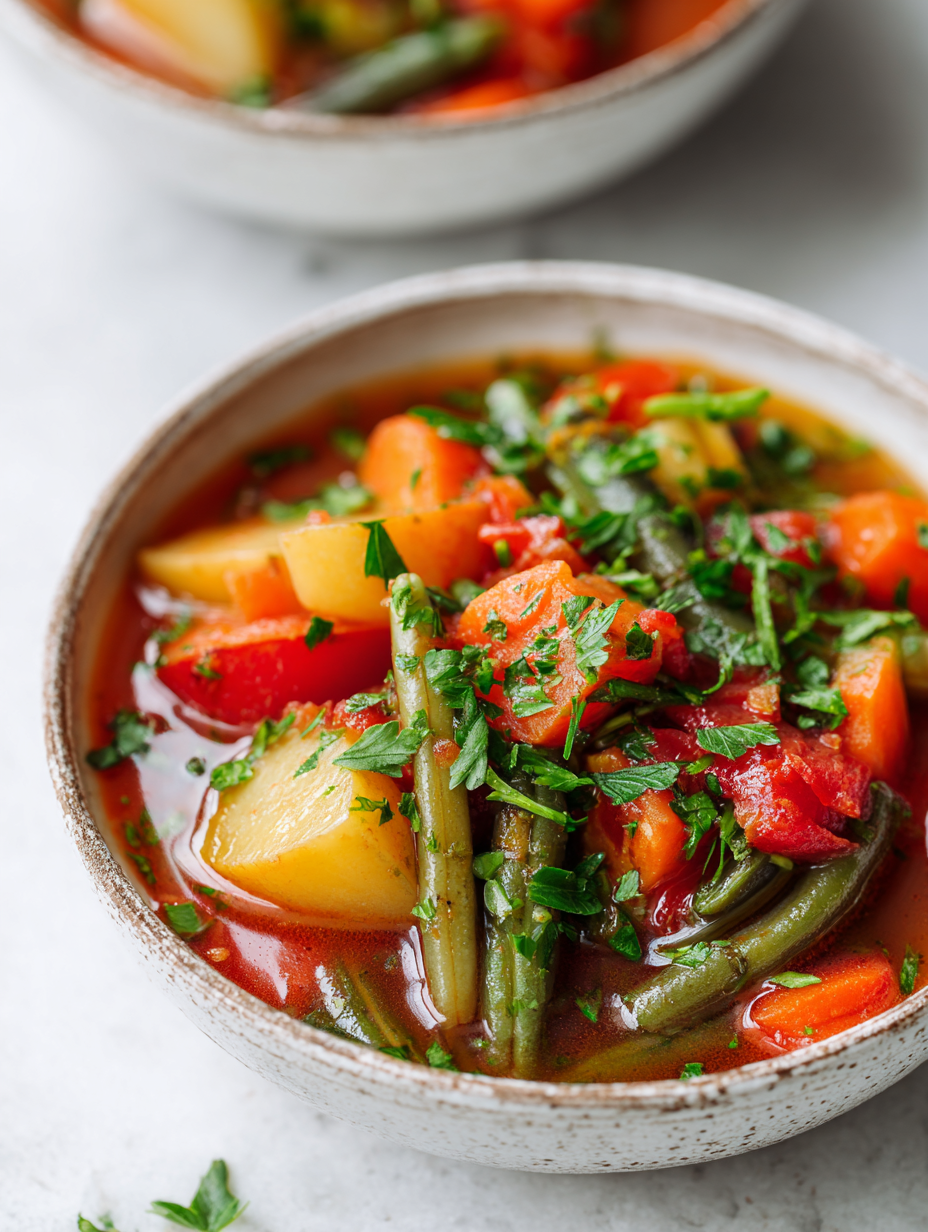
Crockpot Vegetable Stew
Ingredients
Equipment
Method
- Gather all your ingredients: peeled and chopped carrots, diced potatoes, chopped onion, minced garlic, chopped bell pepper, crushed tomatoes, vegetable broth, herbs, salt, and pepper.
- Place the root vegetables—carrots and potatoes—at the bottom of the slow cooker. This helps them soften evenly and absorb flavors nicely.
- Add the chopped onion, bell pepper, and minced garlic on top of the root vegetables, spreading them out gently.
- Pour in the crushed tomatoes along with their juices, then add the vegetable broth. This creates a fragrant, savory base for the stew.
- Toss in the bay leaf and sprig of thyme, then season with salt and pepper to taste. Stir gently to combine all ingredients.
- Cover the slow cooker with the lid and set it to low heat. Let it cook for 6 to 8 hours until the vegetables are tender and the flavors meld together beautifully.
- Halfway through, you can open the lid briefly to check on the stew and gently stir to help everything cook evenly.
- Once the vegetables are soft and the stew smells deeply savory with smoky undertones, turn off the slow cooker and remove the bay leaf and thyme sprig.
- Taste the stew and adjust the seasoning with more salt or pepper if needed. For a smoother texture, mash some of the softened potatoes and carrots directly in the pot.
- Spoon the hot stew into bowls, and drizzle with a little olive oil or squeeze of lemon for brightness. Serve with crusty bread or over grains for a cozy meal.
Tips for best results
- BOLD VEGETABLES: Searing the root vegetables briefly before adding them to the crockpot enhances their sweetness and adds a subtle caramelized aroma, even if you skip it, the slow cooking develops deep flavors.
- LAYER FLAVORS: Start with the hardest veggies at the bottom, like carrots and potatoes, so they soften evenly without overcooking the delicate zucchini and peppers on top.
- SEASON IN STAGES: Taste and adjust seasoning halfway through cooking. The flavors concentrate as the stew reduces, so go easy on salt early on.
- HERB TIP: Add fresh herbs like thyme or bay leaf at the beginning for a fragrant, layered aroma; add more at the end if you want a fresher punch.
- SMOKEY BOOST: Toss in a pinch of smoked paprika or a splash of liquid smoke for a smoky depth that’s surprisingly hearty and warming.
- VEGETABLE TEXTURE: If you want chunkier veggies, cut them into larger pieces. For a more stew-like consistency, mash some of the softened potatoes and carrots before serving.
- FINISH WITH ACID: A squeeze of lemon or a splash of vinegar at the end brightens up the flavors and cuts through the richness, making every spoonful pop.
Common mistakes and how to fix them
- FORGOT to stir: Vegetables may stick or cook unevenly. Stir halfway to distribute heat.
- DUMPED ingredients: Overloading crockpot leads to poor heat circulation. Use a 4-6 quart size.
- OVER-TORCHED stew: High heat can burn the veggies. Keep on low or medium for gentle simmering.
- MISSED seasoning: Under-salted? Add a pinch more at the end for balanced flavor.
Quick fixes and pantry swaps
- If stew looks watery, splash in a bit of tomato paste to thicken and deepen flavor.
- When veggies are overcooked, mash some for a creamier texture and richer taste.
- Splash vinegar or lemon at the end to brighten dull flavors and add shimmer.
- Patch bland stew with a pinch more salt or smoked paprika for complexity.
- Shield delicate herbs by adding them at the end to preserve freshness.
Prep, store, and reheat tips
- Chop all vegetables the night before; store in airtight containers in the fridge. They stay fresh and crisp for up to 24 hours, ready to soften during cooking.
- Prep herbs and measure spices ahead; keep in small jars or bowls. This speeds up the process and keeps flavors bright during slow cooking.
- The stew tastes even better the next day—store leftovers in an airtight container for up to 3 days in the fridge. Reheat gently on the stove, smelling for a rich, fragrant aroma as it warms.
- Freeze individual portions in freezer-safe bags or containers for up to 3 months. Thaw in the fridge overnight, then reheat until steaming hot, checking for a hearty, well-seasoned taste.
Top questions about crockpot vegetable stew
1. How long does it take to cook in the crockpot?
Use a slow cooker on low for 6-8 hours, which allows gentle, thorough cooking and deep flavor development.
2. How should I prepare the vegetables?
Chop vegetables into uniform pieces, about 1-inch cubes, to ensure even cooking and soft texture throughout.
3. When do I add different vegetables?
Add the tougher root vegetables first, then softer ones like zucchini and peppers later to prevent over-softening.
4. How do I season the stew properly?
Use low-sodium broth to control salt; taste and adjust seasoning towards the end for balanced flavor.
5. How can I thicken the stew if it’s too watery?
To thicken the stew, mash some of the cooked vegetables or stir in a splash of tomato paste or a cornstarch slurry near the end.
6. When should I add herbs?
Stir in fresh herbs like thyme or parsley at the end for a bright, fresh flavor boost.
7. How do I store and reheat leftovers?
Store leftovers in an airtight container in the fridge for up to 3 days, reheat gently on the stove until steaming.
8. Can I freeze this stew?
You can freeze the stew in portions for up to 3 months; thaw overnight in the fridge and reheat thoroughly.
9. Can I use dried herbs instead of fresh?
Replace fresh herbs with dried ones if needed—use about one-third of the amount for similar flavor.
10. How do I fix bland stew?
If the stew tastes flat, add a splash of vinegar or lemon juice at the end to brighten the flavors.
This crockpot vegetable stew isn’t just about convenience; it’s about the way slow cooking unlocks layers of flavor in humble ingredients. It’s a simple, honest dish that feels like a warm, nourishing hug after a long day or a chilly weekend. Sometimes, the best meals come from just tossing everything together and letting time do its quiet magic.
In the end, it’s about those little moments—opening the lid and smelling that smoky, sweet aroma—that remind you how satisfying simple, unpretentious cooking can be. This stew is a reminder to embrace the patience of slow heat and the comfort it brings, no matter how busy life gets.