
When I first started making baked potato wedges, I realized it’s all about that perfect crunch on the outside and a pillow-soft interior. It’s surprisingly simple, but small details—like the type of potato and the way you season—make all the difference. I love how these wedges can go from a humble snack to a party platter with just a few tweaks.
There’s something about the process that feels almost meditative—the way the edges crisp up and the smell of roasted potatoes fills the kitchen. It’s a no-fuss recipe that’s forgiving enough for a weeknight dinner but special enough to serve to friends. Honestly, once you nail the technique, it’s hard to go back to soggy or limp wedges.
Focusing on achieving the perfect crunch while keeping the inside fluffy, this recipe highlights the importance of specific potato types and precise baking techniques that often get overlooked.
The story behind this recipe
I remember the first time I accidentally left potatoes in the oven a little too long, and they came out with this irresistible crispy edge that made me think about how overlooked the simple baked potato can be. Since then, I started experimenting with different cuts and seasonings, trying to find that perfect balance of crunch and fluffy inside. It’s become my go-to snack when I want something satisfying but not heavy. There’s a kind of quiet joy in watching these wedges turn golden and crackly, filling the kitchen with that warm, roasted smell that always takes me back to childhood Sunday dinners.
Ingredient breakdown: key components
- Russet potatoes: I love how fluffy they get inside, perfect for that melt-in-your-mouth texture. Swap for Yukon Gold if you prefer a creamier bite, but the crispness might be less pronounced.
- Olive oil: I use good-quality extra virgin for a rich, fruity flavor that crisps up beautifully. You can try avocado oil for a milder taste and even higher smoke point.
- Salt: I prefer coarse sea salt for that satisfying crunch on the outside. Fine salt works too but watch out for over-salting—less is more here.
- Paprika: I love the smoky depth it adds, especially when it gets a little caramelized in the oven. For a milder flavor, switch to sweet paprika or skip it altogether.
- Garlic powder: It gives a warm, savory note that’s subtle but essential. Fresh minced garlic can be used, but be careful—raw garlic can burn quickly in the oven.
- Black pepper: I like freshly cracked for a sharp kick that balances the richness. For a different twist, sprinkle some chili flakes or cumin into the mix.
- Optional herbs: A sprinkle of rosemary or thyme can add aromatic complexity. Use dried if fresh isn’t available, but fresh herbs give a brighter flavor.
Spotlight on key ingredients
Russet potatoes:
- I love how fluffy they get inside, perfect for that melt-in-your-mouth texture. Swap for Yukon Gold if you prefer a creamier bite, but the crispness might be less pronounced.
- Olive oil: I use good-quality extra virgin for a rich, fruity flavor that crisps up beautifully. You can try avocado oil for a milder taste and even higher smoke point.
- Salt: I prefer coarse sea salt for that satisfying crunch on the outside. Fine salt works too but watch out for over-salting—less is more here.
Paprika and garlic powder:
- Paprika: I love the smoky depth it adds, especially when it gets a little caramelized in the oven. For a milder flavor, switch to sweet paprika or skip it altogether.
- Garlic powder: It gives a warm, savory note that’s subtle but essential. Fresh minced garlic can be used, but be careful—raw garlic can burn quickly in the oven.
- Black pepper: I like freshly cracked for a sharp kick that balances the richness. For a different twist, sprinkle some chili flakes or cumin into the mix.
Notes for ingredient swaps
- Russet potatoes: I love how fluffy they get inside, perfect for that melt-in-your-mouth texture. Swap for Yukon Gold if you prefer a creamier bite, but the crispness might be less pronounced.
- Olive oil: I use good-quality extra virgin for a rich, fruity flavor that crisps up beautifully. You can try avocado oil for a milder taste and even higher smoke point.
- Salt: I prefer coarse sea salt for that satisfying crunch on the outside. Fine salt works too but watch out for over-salting—less is more here.
- Paprika: I love the smoky depth it adds, especially when it gets a little caramelized in the oven. For a milder flavor, switch to sweet paprika or skip it altogether.
- Garlic powder: It gives a warm, savory note that’s subtle but essential. Fresh minced garlic can be used, but be careful—raw garlic can burn quickly in the oven.
- Black pepper: I like freshly cracked for a sharp kick that balances the richness. For a different twist, sprinkle some chili flakes or cumin into the mix.
- Optional herbs: A sprinkle of rosemary or thyme can add aromatic complexity. Use dried if fresh isn’t available, but fresh herbs give a brighter flavor.
Equipment & Tools
- Baking sheet: Provides a flat surface for even roasting and crisping.
- Mixing bowl: Tossing potatoes with oil and seasonings.
- Sharp knife: Cutting potatoes into wedges precisely.
- Silicone baking mat or parchment paper: Prevents sticking and makes cleanup easier.
Step-by-step guide to baked wedges
- Equipment & Tools: Gather a sturdy baking sheet, a large mixing bowl, a sharp knife, and a paper towel for drying. A silicone baking mat or parchment helps prevent sticking.
- Wash and dry the potatoes thoroughly. Use russets for fluffiness. Cut each potato into evenly-sized wedges, about 1 inch thick.
- Toss the wedges in a bowl with 3 tablespoons olive oil, ensuring all surfaces are coated evenly. Use your hands for better coverage.
- Season generously with 1 teaspoon coarse sea salt, 1 teaspoon smoked paprika, 1/2 teaspoon garlic powder, and black pepper to taste. Toss again.
- Arrange the wedges in a single layer on the prepared baking sheet, spacing them out to avoid overcrowding. Overlapping causes sogginess.
- Bake at 220°C (430°F) for 25-30 minutes. Flip the wedges halfway through. Look for deep golden edges and a crackly surface.
- Check for doneness: wedges should be crispy on the edges, tender inside, and smell roasted with smoky hints. If not, bake another 5 minutes.
- Remove from oven. Let rest for 3-5 minutes to settle the crispness. Serve hot, garnished with fresh herbs if desired.
- Finishing: Plate the wedges in a rustic bowl or on a platter. Drizzle with a little extra olive oil or a squeeze of lemon for brightness.
Let the wedges rest for 3-5 minutes to firm up. Serve immediately while hot and crispy, garnished with herbs or a squeeze of lemon if desired.
How to Know It’s Done
- Edges are deep golden and crispy.
- Potatoes feel firm but yield slightly when pressed.
- Aromatic smell of roasted potatoes with smoky undertones.
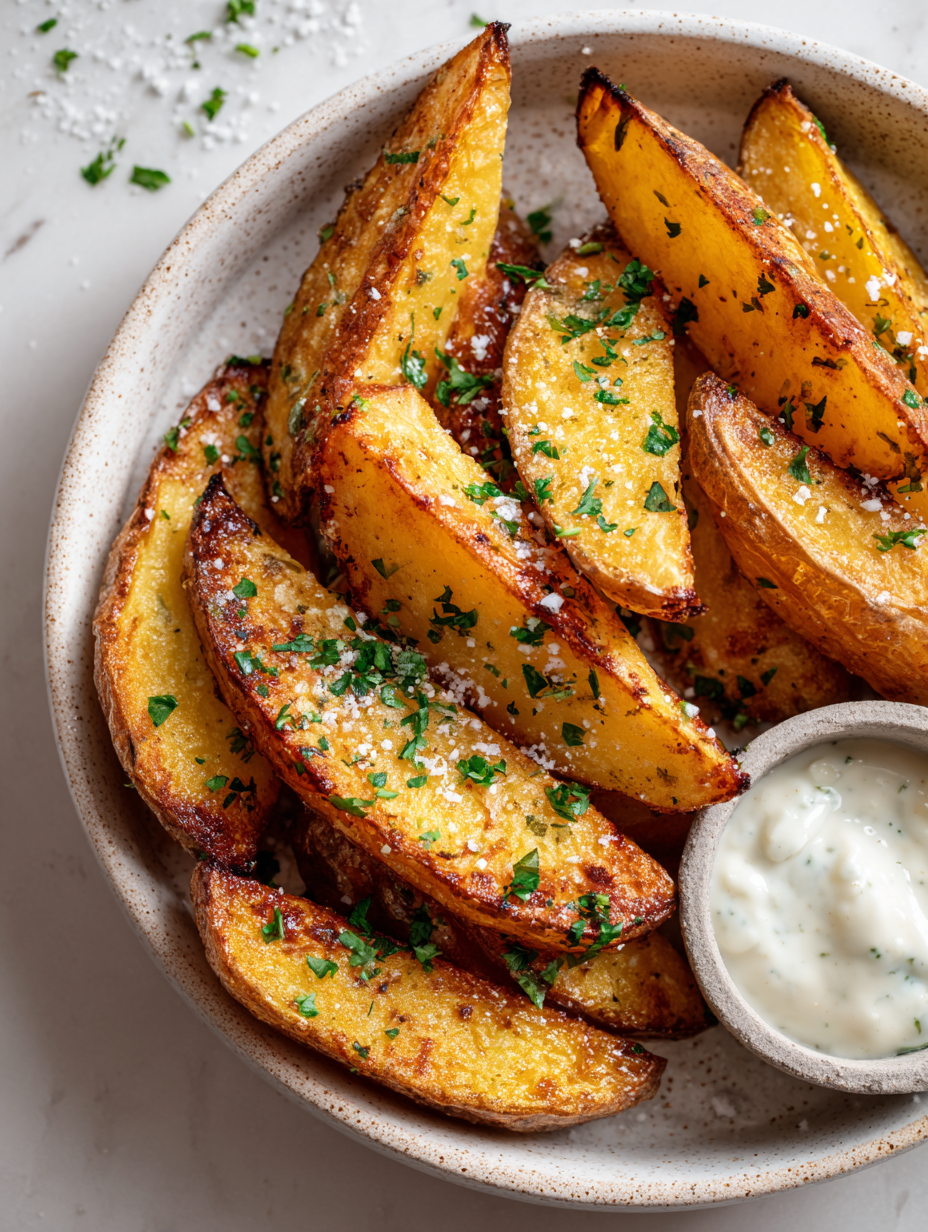
Crispy Baked Potato Wedges
Ingredients
Equipment
Method
- Preheat your oven to 220°C (430°F). Line a baking sheet with parchment paper or a silicone mat to prevent sticking and for easy cleanup.
- Wash and thoroughly dry the potatoes. Using a sharp knife, cut each potato into evenly-sized wedges about 1 inch thick, creating four to six wedges per potato.
- Place the potato wedges into a large mixing bowl. Drizzle with 3 tablespoons of olive oil and toss gently until all sides are coated with oil. This helps the seasoning stick and promotes crispiness.
- Add the coarse sea salt, smoked paprika, garlic powder, and a good crack of black pepper to the bowl. Toss everything together again, ensuring the seasonings evenly coat each wedge.
- Arrange the seasoned wedges in a single layer on your prepared baking sheet, giving each wedge space to breathe. Overcrowding can lead to soggy wedges, so spread them out well.
- Bake in the preheated oven for 25 to 30 minutes, flipping the wedges halfway through. Look for deep golden edges and a crackly, crispy surface as signs of doneness.
- Once golden and crisp, remove the wedges from the oven. Let them rest for a few minutes; this allows the crust to firm up and enhances the crunch.
- Serve the wedges hot, garnished with fresh herbs if desired. Enjoy their warm, crispy texture with your favorite dipping sauce or as a side to your main dish.
Notes
Tips for perfect baked wedges
- Bolded mini-head: Use high heat → Ensures quick, even crisping without drying out the potato edges.
- Bolded mini-head: Soak potatoes briefly → Removes excess starch for extra crunch and less sticking.
- Bolded mini-head: Space wedges apart → Prevents steaming and promotes crispness on all sides.
- Bolded mini-head: Flip halfway → Achieves uniform golden color and crackly texture on both sides.
- Bolded mini-head: Use a silicone mat or parchment → Keeps wedges from sticking and makes cleanup easier.
- Bolded mini-head: Rest before serving → Lets the crust set and keeps wedges crispy longer.
- Bolded mini-head: Don’t overcrowd the pan → Ensures hot air circulates, crisping edges evenly.
Common mistakes and how to fix them
- FORGOT to dry potatoes thoroughly → Pat dry to ensure crisp edges.
- DUMPED too much oil → Use just enough to coat evenly, avoid sogginess.
- OVER-TORCHED edges → Lower oven temp or reduce baking time for even browning.
- MISSED flipping wedges → Flip halfway for uniform crispness and color.
Quick fixes for perfect wedges
- When edges burn → Splash with a little water to cool and prevent further charring.
- If wedges stick → Patch with a little olive oil and gently loosen with a spatula.
- When they lack crunch → Increase oven temp or bake for an extra 5 minutes.
- DUMPED too much oil → Pat wedges with a paper towel and bake a few more minutes for crispness.
- When flavor is dull → Shake on a pinch more salt or sprinkle with fresh herbs before serving.
Prep, store, and reheat tips
- You can cut the potatoes into wedges up to 24 hours ahead. Keep them submerged in water in the fridge to prevent browning and maintain freshness.
- Store the cut, dried potatoes in an airtight container in the fridge. They will stay good for up to 24 hours, but for best results, use within 12 hours to keep them crisp.
- Refrigerated potato wedges will lose some crispness over time. To restore crunch, spread them on a baking sheet and bake at 200°C (390°F) for 8-10 minutes until crispy and fragrant.
- Leftover cooked wedges can be refrigerated for up to 3 days. Reheat in a hot oven or air fryer until sizzling and crisp, about 5-7 minutes, and listen for that crackly sound.
Top questions about baked potato wedges
1. Can I use different types of potatoes?
Use starchy potatoes like Russets for the best crunch and fluffy interior. Waxy potatoes can turn out denser and less crispy.
2. How long should I bake the wedges?
Bake at 220°C (430°F) for about 25-30 minutes, flipping halfway. Look for deep golden edges and a crackly surface.
3. Should I rinse or soak potatoes before baking?
Dry the potato wedges thoroughly before oiling to ensure they crisp up. Moisture is the enemy of crunch.
4. Can I reheat leftover wedges?
Yes, you can reheat them in a hot oven or air fryer until crispy, about 5-7 minutes. Don’t microwave, they’ll get soggy.
5. Do I need special equipment for baking?
Using a silicone baking mat or parchment paper keeps wedges from sticking and makes cleanup easier.
6. Can I customize the seasonings?
Adjust seasoning to your taste. More paprika for smokiness, or skip garlic for a milder flavor.
7. How do I get the wedges extra crispy?
For extra crispness, space the wedges well on the baking sheet and bake at high heat. Avoid overcrowding.
8. Can I add herbs or spices after baking?
Using fresh herbs like rosemary can add aromatic brightness. Dried herbs work but are less vibrant.
9. How do I avoid burning the wedges?
Over-baking can lead to burnt edges. Keep an eye on them after 25 minutes and flip for even color.
10. My wedges are soft, what do I do?
If the wedges are too soft, increase oven temperature slightly or bake a few extra minutes until crispy.
These wedges aren’t just a side—they’re a small act of kitchen rebellion, crisping up in the oven while the world stays busy. They’re perfect for lazy weekends or whenever you need something reliably satisfying with minimal fuss. The smell of roasted potatoes filling your space is a reminder that simple ingredients can still surprise you.
Once you get the hang of it, baking potato wedges becomes a bit of an act of quiet pride. They’re forgiving, customizable, and endlessly adaptable—just like that. No matter how often I make them, I still find joy in that first bite, crispy on the outside and fluffy inside, with just enough seasoning to keep things interesting.