Switching from deep-frying to baking changes the game for making samosas at home. It’s a way to enjoy that crispy, flaky shell without the greasy aftermath. Plus, it keeps the kitchen cleaner and less stressful, which is a big win on weeknights.
Baking also forces you to think differently about the filling—more carefully seasoned, less oily, with a focus on texture and balance. It’s a way to reclaim a comfort snack, making it a bit healthier without losing the satisfying crunch or the spicy, savory punch.
This approach isn’t about cutting corners; it’s about embracing a new method that still delivers on flavor and crunch. It’s a reminder that you don’t always need a deep fryer to get that perfect bite—just a good oven, patience, and a little love.
This baked version of samosas turns the usual deep-fry ritual into a healthier, less messy bake, making it accessible for weeknights when deep-frying feels too much effort. It’s about reclaiming a favorite snack without sacrificing flavor or crunch, perfect for those who want comfort food without the grease.
The story behind this recipe
I first started baking samosas during a busy winter when I craved that familiar crunch without the fuss of deep-frying. One day, I accidentally left them in a bit longer than planned, and their crispness surprised me—almost like a toasty cracker. Since then, I’ve been tweaking the oven temperature and filling to get that perfect balance of crunch and spice. It’s become a go-to for me when I want comfort food without the greasy cleanup, especially on those days when I need something warm and satisfying but don’t want to mess with oil.
Key ingredients at a glance
- Potatoes: I mash these until they’re fluffy and smooth, which creates a creamy contrast to the spicy filling. Swap for sweet potatoes if you want a sweeter, denser bite.
- Cumin seeds: I toast these lightly until they release a nutty aroma—this step wakes up their flavor. Skip if you prefer a milder, subtler spice background.
- Green peas: I like them cooked until just tender, adding a slight pop of sweetness. Frozen peas work great, just thaw and drain well before mixing.
- Phyllo or puff pastry: I opt for thin, flaky pastry to get that crispy shell without deep-frying. For a chewier texture, try a thicker dough, but adjust baking time accordingly.
- Lemon juice: I squeeze fresh for brightness that cuts through the richness. Use bottled lemon juice in a pinch, but the flavor won’t be as vibrant.
- Garam masala: I sprinkle it generously into the filling for warmth and complexity. For a milder version, reduce the amount or omit it altogether.
- Egg wash: I brush the samosas lightly before baking to encourage golden color and shine. Skip if you’re making vegan samosas, but expect a less glossy finish.
Spotlight on key ingredients
Potatoes:
- I mash these until fluffy and smooth, creating a creamy contrast. Use sweet potatoes for a denser, sweeter bite.
- Cumin seeds: I toast these lightly until fragrant—this step really wakes up their nutty aroma. Skip if you prefer a milder flavor.
Green peas:
- I cook them just until tender, adding a slight pop of sweetness and color. Frozen peas work fine—thaw and drain well.
- Garam masala: I sprinkle this in generously for warmth; it adds complexity. Reduce or omit for a milder, simpler flavor.
Notes for ingredient swaps
- Dairy-Free: Swap ghee or butter for coconut oil or a neutral oil. Expect a slightly different flavor and less richness.
- Vegan Filling: Use tofu or tempeh crumbles instead of potatoes to keep it plant-based. Maintain the same seasoning for flavor.
- Gluten-Free: Replace all-purpose flour with a gluten-free flour blend. Pastry might be a bit more fragile but still tasty.
- Low-Sodium: Omit or reduce salt and spice blends. Enhance flavor with fresh herbs or a squeeze of lemon for brightness.
- Spicy Heat: Add chopped green chilies or hot sauce to the filling for extra kick. Adjust to taste to keep it balanced.
- Sweet Version: Incorporate finely chopped dried fruits like raisins or apricots into the filling for a sweet-savory combo.
- Herb Twist: Mix in fresh cilantro or mint into the filling for a burst of fresh aroma and flavor.
Equipment & Tools
- Baking sheet: To hold the samosas during baking
- Parchment paper or silicone mat: Prevent sticking and make cleanup easier
- Rolling pin: Roll out dough into thin sheets
- Mixing bowls: Combine and hold the dough and filling
- Skillet or frying pan: Cook the filling and spices
- Pastry brush: Apply egg wash or milk for shine
- Wire rack: Cool the baked samosas evenly
Step-by-step to baked samosas
- Preheat your oven to 200°C (390°F). Line a baking sheet with parchment paper or a silicone mat to prevent sticking.
- Prepare the filling: In a skillet over medium heat (about 160°C/320°F), heat a tablespoon of oil. Add cumin seeds, cook until fragrant, about 30 seconds. Add chopped onions, cook until translucent, about 5 minutes. Stir in mashed potatoes, green peas, spices, and a squeeze of lemon juice. Cook for another 2-3 minutes, then let cool slightly.
- Make the dough: In a mixing bowl, combine 2 cups of all-purpose flour, 1/2 teaspoon salt, and 1/4 teaspoon turmeric. Add 1/4 cup melted ghee or butter, mix until crumbly. Gradually add cold water, kneading until a smooth, firm dough forms. Cover with a damp cloth and let rest for 15 minutes.
- Assemble samosas: Divide dough into 6-8 equal portions. Roll each into a thin oval about 15cm (6 inches) long. Cut each oval in half to form two semi-circles. Wet the straight edge with a little water. Place a spoonful of filling on one end, fold into a cone shape, sealing the edge with your fingers or a fork.
- Place the assembled samosas on the prepared baking sheet, seam-side down. Brush the tops lightly with an egg wash or milk for a golden finish.
- Bake: Put the tray in the oven. Bake for 20-25 minutes, rotating halfway through, until the samosas are golden brown and crisp. Keep an eye on them after 20 minutes, as oven temps vary.
- Cool slightly on a wire rack before serving. Serve warm with chutney or yogurt.
- For extra crunch, broil for 2 minutes at the end, watching carefully to prevent burning.
Let the baked samosas rest for 5 minutes on a wire rack. Serve warm with chutney or yogurt, ensuring they stay crisp and fragrant.
How to Know It’s Done
- Samosas are golden and crispy on the outside.
- Filling is hot and slightly firm but not dry.
- Pastry edges are sealed and not cracked.
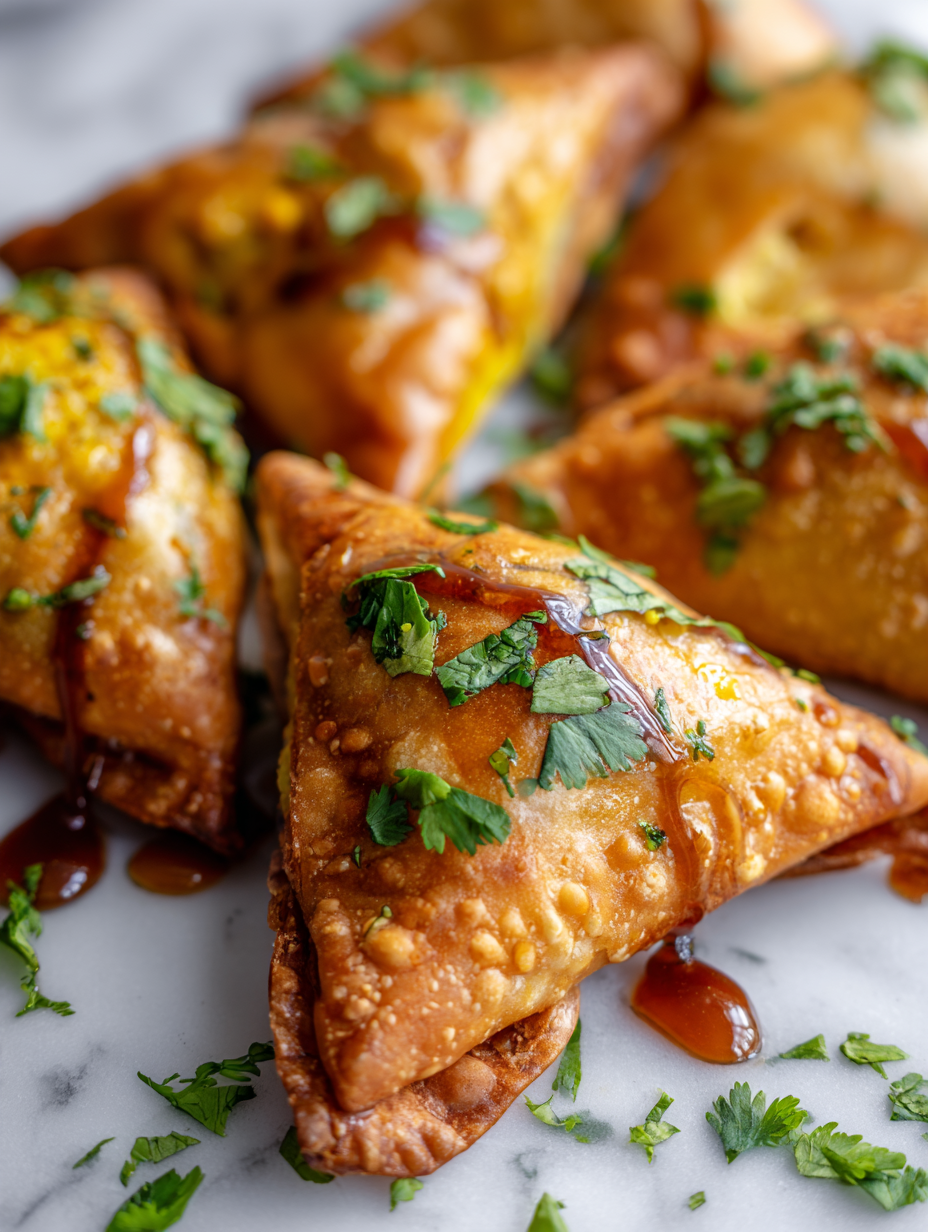
Baked Samosas
Ingredients
Equipment
Method
- Preheat your oven to 200°C (390°F) and line a baking sheet with parchment paper or a silicone mat.
- In a skillet over medium heat, toast cumin seeds until fragrant, about 30 seconds. Add chopped onions and cook until translucent, about 5 minutes, filling your kitchen with a warm aroma.
- Add mashed potatoes, green peas, garam masala, and a squeeze of lemon juice to the skillet. Mix well, cook for another 2-3 minutes until heated through, then remove from heat and let cool slightly.
- Meanwhile, in a mixing bowl, combine flour, salt, and turmeric. Stir in melted ghee until the mixture resembles coarse crumbs.
- Gradually add cold water, kneading gently until a firm, smooth dough forms. Cover with a damp towel and let rest for 15 minutes to relax the gluten.
- Divide the dough into 6-8 equal portions. Roll each piece into a thin oval about 15cm long on a floured surface.
- Cut each oval in half to create semi-circles. Wet the straight edge with a little water to help seal.
- Place a spoonful of filling near the straight edge, then fold into a cone shape, sealing the edge with your fingers or a fork.
- Place the assembled samosas on the prepared baking sheet. Brush the tops lightly with beaten egg for a shiny, golden finish.
- Bake in the preheated oven for 20-25 minutes, rotating halfway through, until the samosas are golden brown and crispy.
- Remove from oven and cool slightly on a wire rack. Serve warm with chutney or yogurt for a satisfying snack or meal.
Pro tips for perfect baked samosas
- Use a hot oven (200°C/390°F) to quickly crisp the exterior without over-drying the filling.
- Keep the dough chilled before rolling to prevent sticking and tearing during assembly.
- Seal edges firmly with water or egg wash to avoid filling leaks as they bake.
- Brush with egg wash for a shiny, golden finish—skip if vegan, but expect a matte look.
- Bake on the middle rack for even heat distribution and consistent crispness.
- Rest baked samosas for 5 minutes on a rack—this helps the crust set perfectly and stay crispy.
- For extra crunch, broil for 1-2 minutes at the end—keep a close eye to prevent burning.
Common mistakes and how to fix them
- FORGOT to preheat oven → Always preheat for even baking and crispness.
- DUMPED filling directly into oven → Ensure filling is cooled for better crust adhesion.
- OVER-TORCHED edges → Cover edges with foil if they brown too quickly.
- MISSED sealing edges → Seal well to prevent filling escape during baking.
Quick fixes and pantry swaps
- When samosas crack open, cover edges with foil to prevent over-browning.
- Splash a little water on the edges if sealing becomes tricky.
- Patch soggy bottoms by broiling for 1-2 minutes until crisp.
- Dumped filling before cooling? Chill it first for easier handling.
- When the filling feels dry, add a splash of lemon juice for brightness.
Prep, store, and reheat tips
- Prep the filling a day in advance; keep it covered in the fridge to let flavors meld and develop a smoky aroma.
- Assembled and uncooked samosas can be stored in the fridge for up to 24 hours; keep them covered to prevent drying out.
- Frozen baked samosas can last up to 1 month; reheat directly from frozen for extra crunch, adding 5 minutes to baking time.
- Reheat in a hot oven (200°C/390°F) until crispy and heated through—look for a crackling exterior and fragrant aroma.
Top questions about baked samosas
1. Can I use sweet potatoes instead?
Use firm, starchy potatoes like Russets for the best mash and texture. They hold up well during baking.
2. Can I use fresh peas?
Yes, frozen peas are fine. Just thaw and drain them thoroughly before mixing into the filling.
3. Do I need to brush the samosas before baking?
Brush with beaten egg or milk before baking to get that shiny, golden crust. Vegan? Use plant-based milk or skip it.
4. How do I know when the samosas are ready?
Bake at 200°C (390°F) for about 20-25 minutes. Watch for golden, crispy edges and a fragrant aroma as signs of doneness.
5. My samosas are cracking open, what do I do?
If the edges crack open, gently seal them with a little water or egg wash before baking. This keeps the filling inside.
6. How should I store baked samosas?
Store cooled, baked samosas in an airtight container in the fridge up to 3 days. Reheat in a hot oven for crispness.
7. How do I assemble the samosas properly?
Use a sharp knife or pizza cutter to cut the dough into even shapes. Keep the dough chilled for easier handling.
8. What if the filling is too dry?
If the filling feels dry, stir in a squeeze of lemon juice or a drizzle of oil to add moisture and brightness.
9. How can I prevent the samosas from sticking?
To prevent sticking, line your baking sheet with parchment paper or a silicone mat. Keep the dough chilled until use.
10. Can I freeze baked or unbaked samosas?
Yes, you can freeze unbaked samosas for up to a month. Bake directly from frozen, adding a few extra minutes.
Baked samosas offer a healthier way to enjoy that familiar crunch without the mess of deep-frying. They remind me of cozy winter afternoons when the smell of spices fills the house, making everything feel a little warmer.
Sharing these with friends or family brings a sense of comfort and nostalgia, especially when dipped in tangy chutney or cooling yogurt. It’s funny how a simple snack can evoke so many memories and moments of quiet satisfaction.