

What makes this crockpot pork stew stand out is how the slow cooking transforms the pork into something so tender it practically melts in your mouth. It’s like a gentle, unhurried hug of flavor that comes from breaking down the connective tissues just right, without drying out the meat. I love how the aroma fills the kitchen, turning simple ingredients into a comforting bowl that feels like a warm secret kept under a cozy blanket.
This recipe is my go-to when I want something honest and satisfying, especially after a long day. It’s a dish that doesn’t demand much fuss—just a little prep in the morning, and by dinner, you’ve got this unassuming, soulful stew. The slow cooker does all the work, giving me space to breathe and enjoy the house smelling like a Sunday afternoon in autumn.
Focusing on the unexpected tenderness of the pork, achieved through a slow-cook that breaks down connective tissues without drying out the meat, making it feel like a cozy hug in every bite.
The story behind this recipe
- This recipe sprouted from a lazy weekend afternoon when I realized I had a fridge full of odds and ends and no idea what to do with them. I threw everything into the slow cooker, including a hunk of pork shoulder I’d been meaning to use up, and just let it do its thing. The smell that filled the house was unexpectedly comforting—rich, smoky, with a hint of sweetness from caramelized onions and a splash of soy sauce. That moment made me see how simple ingredients, given time, can turn into something unexpectedly soulful.
- Over the years, I’ve tweaked this stew to keep it honest and forgiving. It’s a go-to for busy weekdays when I want a meal that’s ready without fuss, but still feels like a hug. I love how the pork gets so tender it practically falls apart, and the broth thickens into a glossy, flavorful gravy. It’s not fancy, but it’s honest and deeply satisfying—just like the kind of comfort food that sneaks into your bones.
Ingredient breakdown: key components
- Pork shoulder: I love how the fatty marbling melts into tender, juicy bites. If you prefer leaner, try pork loin, but expect a bit less richness.
- Carrots: Their sweet, earthy aroma intensifies during slow cooking. Swap for parsnips if you want a milder, slightly nutty twist.
- Onions: They become sweet and translucent, infusing the broth with depth. Red onions can add a subtle sharpness if that’s your thing.
- Garlic: It’s the kitchen’s magic—smells so pungent when raw, turns mellow and fragrant as it cooks. Use fresh for vibrant flavor, or roasted garlic for a smoky note.
- Broth: I use chicken or beef stock, depending on what I have. For a richer stew, add a splash of red wine or a dash of soy sauce to boost umami.
- Herbs: Bay leaves and thyme are my staples—they add a warm, aromatic background. Fresh herbs near the end brighten the dish, so don’t skip them.
- Tomatoes: A can of diced tomatoes adds acidity and richness. If you want less tang, hold back or substitute with a splash of balsamic vinegar after cooking.
Spotlight on key ingredients
Pork shoulder:
- I love how the fatty marbling melts into tender, juicy bites. If you prefer leaner, try pork loin, but expect a bit less richness.
- Carrots: Their sweet, earthy aroma intensifies during slow cooking. Swap for parsnips if you want a milder, slightly nutty twist.
- Onions: They become sweet and translucent, infusing the broth with depth. Red onions can add a subtle sharpness if that’s your thing.
Garlic and herbs:
- Garlic: It’s the kitchen’s magic—smells so pungent when raw, turns mellow and fragrant as it cooks. Use fresh for vibrant flavor, or roasted garlic for a smoky note.
- Broth: I use chicken or beef stock, depending on what I have. For a richer stew, add a splash of red wine or a dash of soy sauce to boost umami.
- Herbs: Bay leaves and thyme are my staples—they add a warm, aromatic background. Fresh herbs near the end brighten the dish, so don’t skip them.
Notes for ingredient swaps
- Pork shoulder: I prefer it for its marbling and tenderness, but pork loin can work for leaner bites—just watch it so it doesn’t dry out.
- Carrots: Their sweet, earthy flavor is key here; try parsnips if you want a milder, slightly nutty note that softens beautifully.
- Onions: They become sweet and fragrant as they cook down—red onions add a sharper bite if you like a bit of zing, but yellow or white work fine.
- Garlic: Fresh garlic gives a punch of aroma, but roasted garlic can bring a smoky, mellow sweetness if you prefer a subtler flavor.
- Broth: Chicken or beef stock are classic; for a richer, more complex flavor, add a splash of red wine or soy sauce—your call.
- Herbs: Bay leaves and thyme are my staples—they add warmth, but try rosemary or a pinch of oregano for a different herbal note.
- Tomatoes: Diced canned tomatoes add acidity and depth; if you want less tang, hold back or add a splash of balsamic vinegar after cooking.
Equipment & Tools
- Slow cooker: Main cooking vessel for long, gentle heat.
- Skillet: For browning pork to develop flavor.
- Knife: Chopping ingredients efficiently.
- Cutting board: Protects surfaces during prep.
- Wooden spoon: Stirring and mixing ingredients.
Step-by-step guide to crockpot pork stew
- Gather your equipment: a large slow cooker, a sharp knife, a cutting board, and a wooden spoon for stirring.
- Prep ingredients: cut the pork shoulder into 2-inch chunks, peel and chop carrots, and dice onions.
- In a skillet over medium-high heat (about 160°C / 320°F), brown the pork chunks for 3-4 minutes per batch until golden. This step adds flavor but can be skipped if you’re pressed for time.
- Transfer browned pork to the slow cooker. Add chopped carrots, onions, minced garlic, bay leaves, and sprigs of thyme.
- Pour in 4 cups of broth—chicken or beef, depending on your preference. Add a splash of soy sauce or red wine for extra depth.
- Set the slow cooker to low and cook for 6-8 hours. The house will fill with a rich, savory aroma that promises comfort.
- Check halfway: if the liquid looks too low, add a bit more broth. Stir gently to combine flavors.
- Once the cooking time is up, remove the bay leaves and thyme sprigs. Taste and adjust seasoning with salt and pepper.
- For finishing, turn the slow cooker to high for 10-15 minutes to thicken the gravy slightly if needed. The stew should be glossy and thick enough to coat the back of a spoon.
- Rest the stew for 10 minutes before serving. Ladle into bowls, sprinkle with fresh herbs if desired, and enjoy.
Let the stew rest for 10 minutes to allow flavors to settle. Serve hot, garnished with fresh herbs if desired, and enjoy the comforting aroma.
How to Know It’s Done
- Pork is tender and easily shredded with a fork.
- Broth has thickened into a glossy gravy coating the meat and vegetables.
- Vegetables are soft but not mushy; carrots should hold some shape.
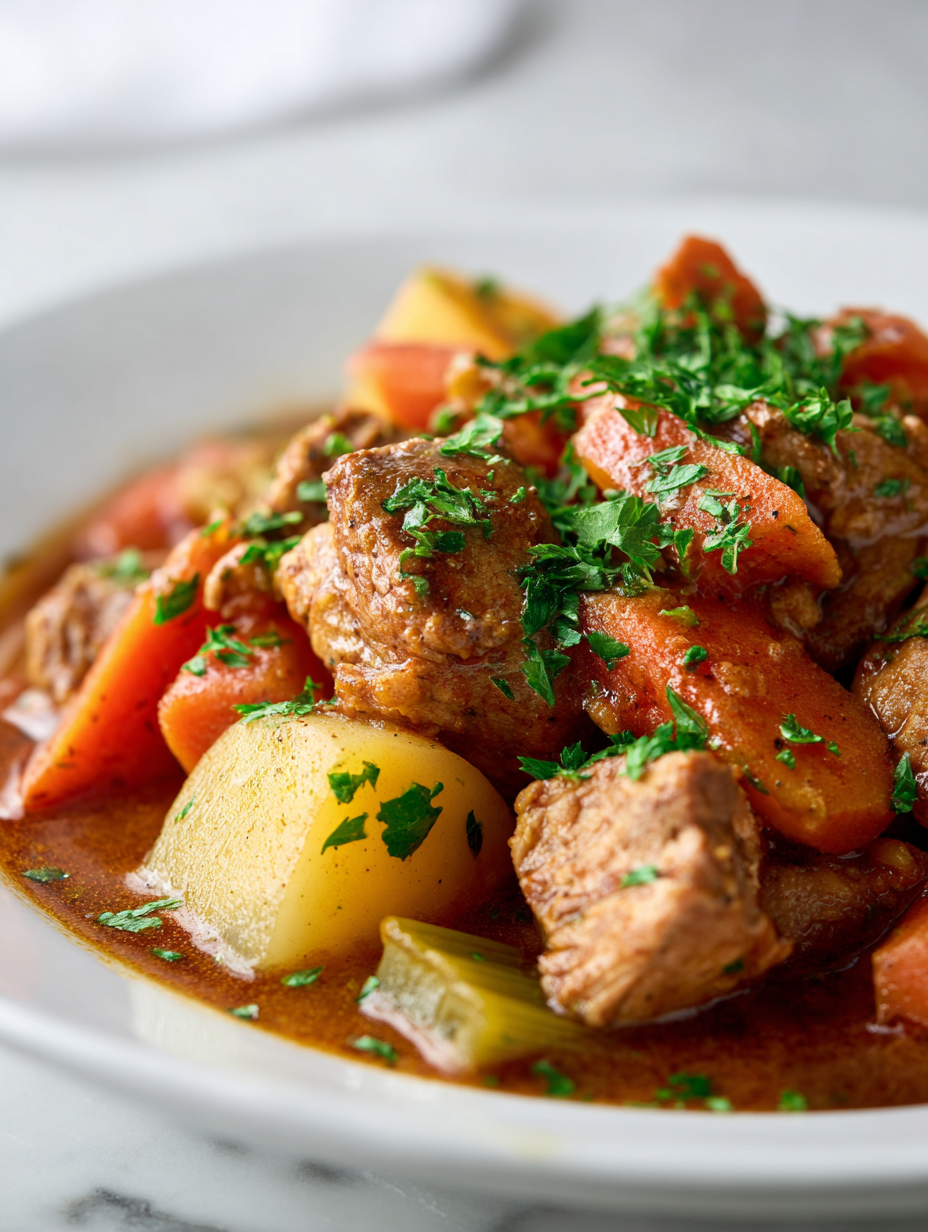
Crockpot Pork Stew
Ingredients
Equipment
Method
- Start by chopping your pork shoulder into 2-inch chunks, then set them aside. Peel and chop the carrots into thick slices, and dice the onion into small pieces. Mince the garlic cloves.
- In a skillet over medium-high heat, add a little oil and brown the pork chunks in batches until they develop a deep golden crust—about 3-4 minutes per batch. This step adds flavor and a rich aroma.
- Transfer the browned pork to your slow cooker. Add the chopped carrots, diced onion, minced garlic, bay leaves, and thyme sprigs.
- Pour in the broth and add the diced tomatoes along with soy sauce if using. Give everything a gentle stir to combine all the flavors.
- Cover the slow cooker with its lid and cook on low for 6 to 8 hours. During this time, your house will fill with a savory, comforting aroma as the pork becomes irresistibly tender.
- About halfway through, check the stew. If the liquid appears low, add a splash more broth to keep everything moist. Stir gently to distribute the ingredients evenly.
- Once the cooking time is up, remove the bay leaves and thyme sprigs. Taste the broth and season with salt and pepper as needed.
- If you prefer a slightly thicker gravy, turn the slow cooker to high and cook uncovered for an additional 10-15 minutes until the sauce has thickened and glossy.
- Let the stew rest for about 10 minutes to allow the flavors to settle and the sauce to thicken further. Serve the hearty, tender pork and vegetables in bowls, garnished with fresh herbs if desired.
Pro tips for perfect Crockpot Pork Stew
- Bolded Sear: Sear pork in batches over medium-high heat until golden—this locks in flavor and creates a richer stew.
- Aromatics First: Start with onions and garlic in the skillet—smell them turn sweet and fragrant before adding to the slow cooker.
- Layer Flavors: Add herbs and liquids gradually—this builds depth and prevents overwhelming the dish too early.
- Check Liquid: Halfway through, peek at the broth—if it’s too low, top up to keep everything moist and tender.
- Finish with a Flare: Turn the slow cooker to high at the end—this helps create a glossy, slightly thickened gravy perfect for serving.
- Tender Test: The pork should fall apart easily and vegetables be soft but not mushy—use a fork to check tenderness.
- Rest Before Serving: Let the stew sit for 10 minutes after cooking—this helps flavors settle and makes serving easier.
Common mistakes and how to fix them
- FORGOT to brown pork: Skip this step, and the stew will lack depth and rich flavor.
- DUMPED in all ingredients at once: Layer flavors by adding ingredients in stages for better taste.
- OVER-TORCHED or burned: Use low heat and stir often to prevent burning and bitterness.
- UNDERSALTED: Taste and season gradually; under-seasoned stews taste flat and dull.
Quick fixes and pantry swaps
- When stew looks too watery, splash in a cornstarch slurry to shimmer and thicken.
- If pork isn’t tender enough, cover and cook on high for an extra 30 minutes.
- DUMPED in too many ingredients? Add a splash of vinegar or lemon juice to brighten flavors.
- When aroma fades, splash in a dash of soy sauce or Worcestershire for an instant flavor boost.
- Splash a little water or broth if stew is too thick and crackling, then stir gently.
Prep, store, and reheat tips
- Prep ingredients like chopping vegetables and browning pork a day ahead; it sharpens flavors and saves time on cooking day.
- Store the chopped vegetables and browned pork in airtight containers in the fridge for up to 24 hours. The aroma will become more inviting overnight.
- Stew can be kept in the fridge for 3-4 days; reheating will intensify flavors, making it even more comforting. Just warm slowly on the stove, smelling the gravy re-mingle.
- For longer storage, freeze in portions for up to 3 months. Thaw overnight in the fridge and reheat as above, watching for bubbling and aroma to ensure it’s heated through.
Top questions about crockpot pork stew
1. Can I use pork loin instead?
Look for pork shoulder with good marbling—fat means flavor and tenderness after slow cooking.
2. Can I make this stew vegetarian?
Yes, but expect less juiciness and tenderness. Loin cooks faster and can dry out if overdone.
3. How do I make this gluten-free?
Add hearty vegetables like potatoes or mushrooms, and use vegetable broth for rich flavor.
4. Can I freeze leftovers?
Use gluten-free soy sauce or omit it altogether. Check that all other ingredients are gluten-free.
5. How long does it take to cook?
Absolutely. Let it cool, transfer to airtight containers, and freeze up to 3 months.
6. What if the stew is too watery?
Typically 6-8 hours on low, depending on your slow cooker and pork size.
7. How do I know when the pork is tender?
Turn to high at the end and let it simmer uncovered for 10-15 minutes to thicken.
8. Can I add beans or other proteins?
It should fall apart easily when tested with a fork and smell rich and savory.
9. What herbs work best?
Yes, add cooked beans near the end or other cooked proteins, but keep in mind cooking times vary.
10. Should I season at the start or end?
Bay leaves and thyme are classic, but rosemary or parsley added near the end brighten the dish.
This stew feels like a quiet victory after a long day, filling the house with a smoky, savory aroma that lingers. It’s honest, unpretentious, and rooted in simple ingredients that come alive through slow cooking. There’s a satisfaction in how the pork practically falls apart, soaking up all those rich, tender flavors.
In the end, it’s more than just a meal; it’s a reminder of how approachable comfort food can be. No fuss, just patience and good ingredients, turning into something that sticks with you long after the last spoonful.